


Description
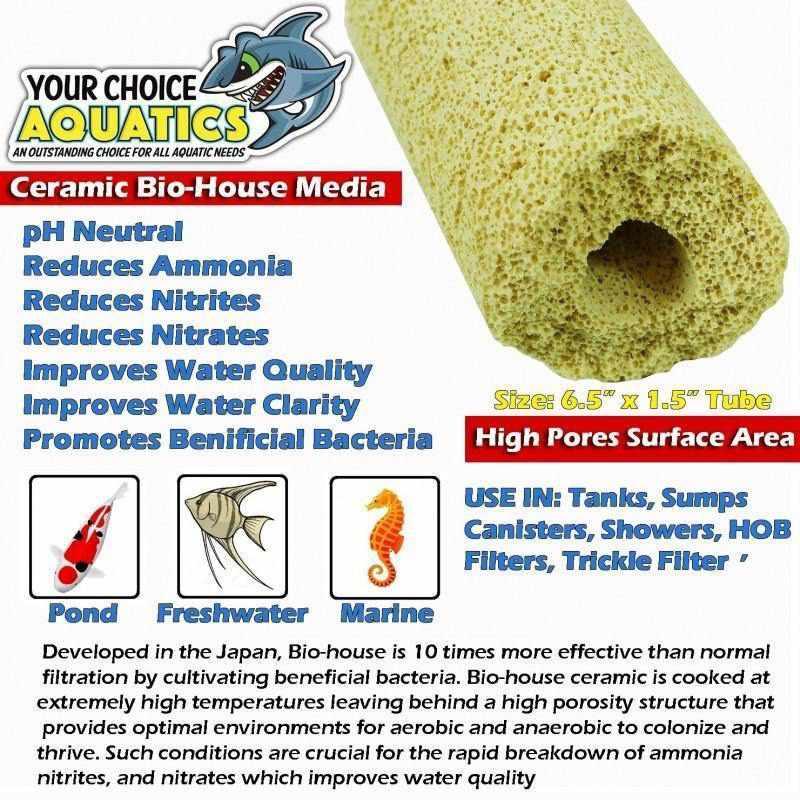
This is SeaSide Aquatics Ceramic Bacteria House Bio-House Media designed for Bakki Showers. This economical filter medium is a great alternative to the more expensive Momotaro Bacteria House Filter Media or Ceramedia - at a fraction of the cost without sacrificing performance.
Features:
- It very quickly wicks water up into the full length of the media, and then retains that water quite well. Once it's full it weighs about 3-4 times as much as when it is dry. Contributing to its great de-nitrification capabilities.
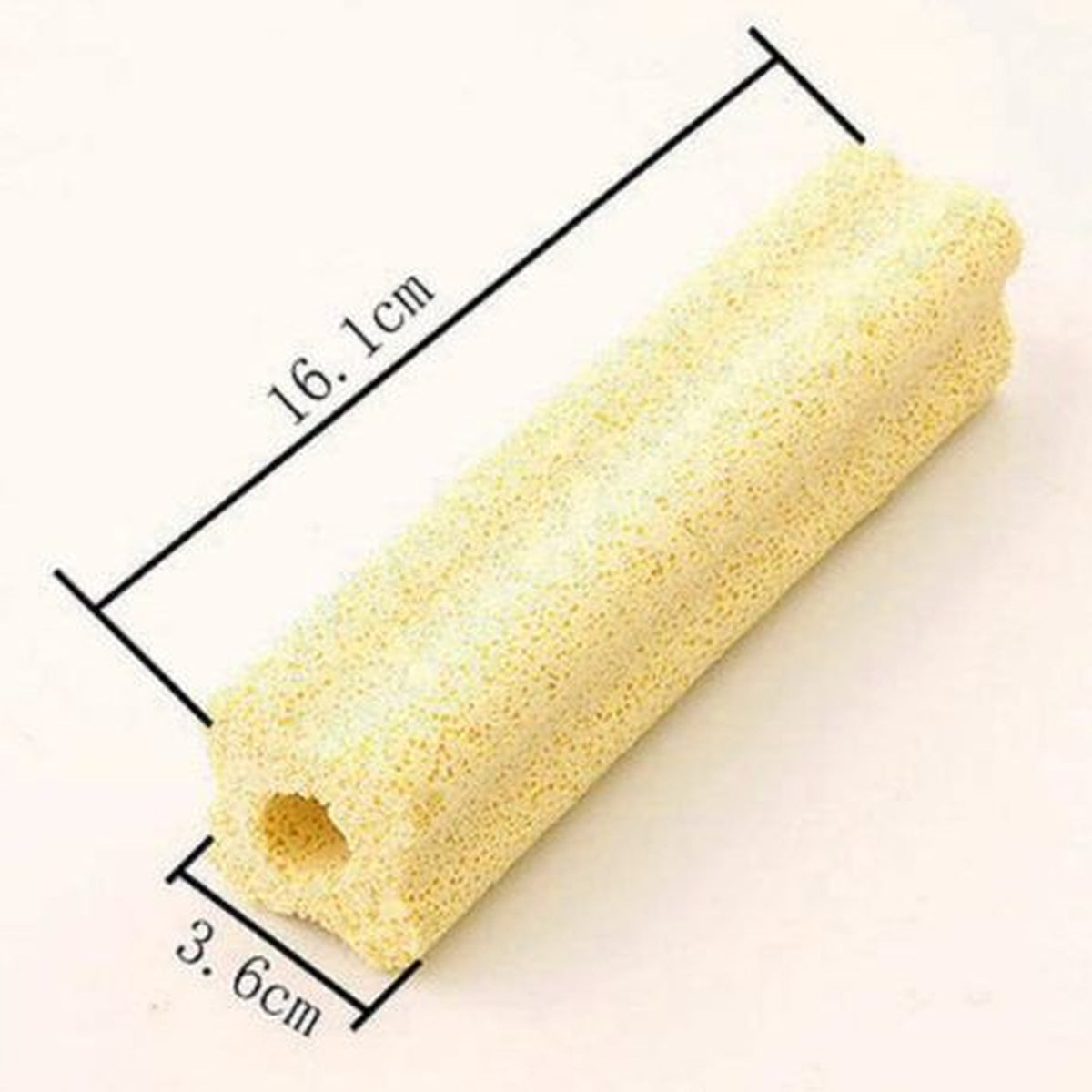
- Each piece is approximately 6.25" long by 1.5" diameter
- The ABSOLUTE BEST bio media available for the price!
- Made of long-lasting, highly porous ceramic material
- pH neutral - Suitable for both freshwater and saltwater filters
- Effectively accelerates microorganism development; Removes ammonia & nitrites
- 10 X more effective than normal filtration media by cultivating beneficial bacteria.
- Cooked at extremely high temperatures leaving behind a highly porous structure that provides an optimal environment for aerobic and anaerobic beneficial bacteria to colonize and thrive.
- For use in Bakki showers, Trickle filters, shower filters, sumps, tanks, and other filterers.
2 Size Options available:
.05 Cubic Feet- Small Bacteria House Media Bakki Shower H-1
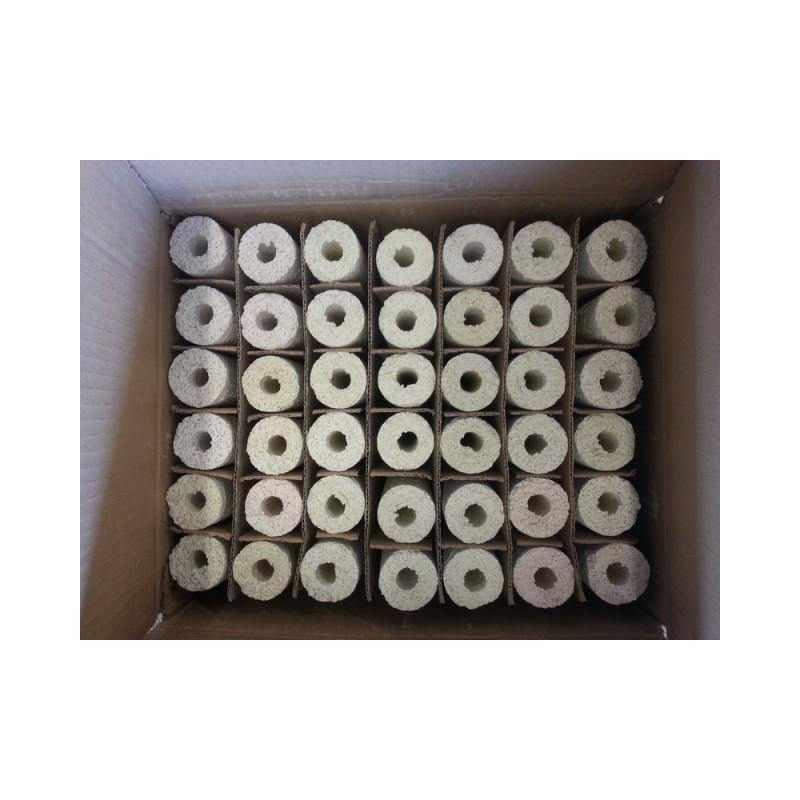
- Approximately 0.5 Cubic Feet. Comes in a box of approximately 12"x12"x8"
- Each box contains approximately 49 pcs of media inside the box.
1.6 Cubic Feet - Large Bacteria House Media Bakki Shower Media H-1 Master box
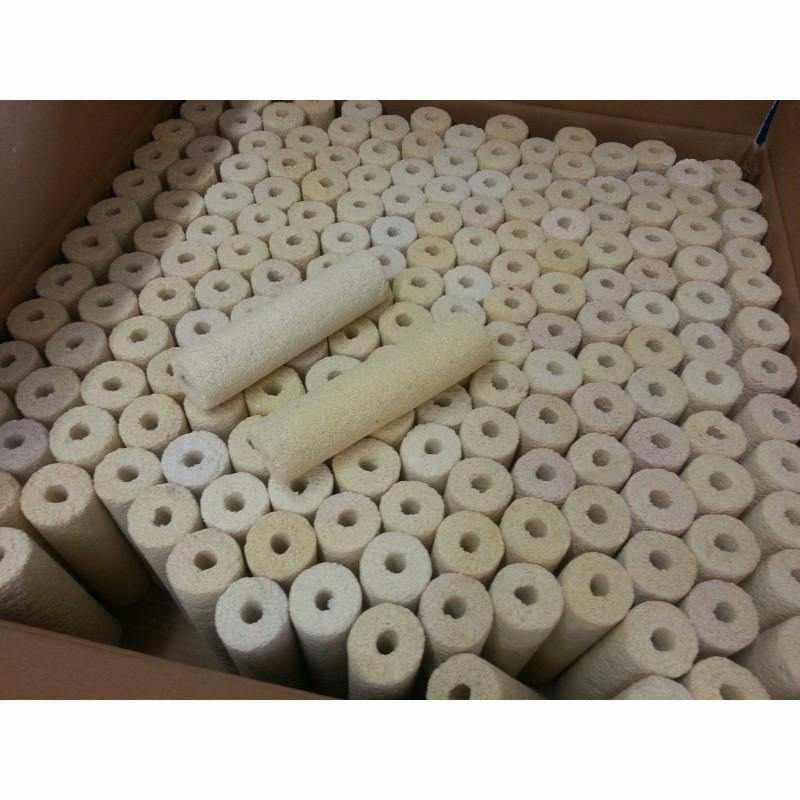
- Approximately 1.5-1.6 Cubic Feet. Comes in a box of approximately 22.5"x17.5"x8"
- Each box contains approximately 154 pcs of media inside the box.
2 Shape Options available:
- Round
- Square - great for stacking media
Important: Each box will be hand-packed before leaving. However, the media is very fragile and it is highly likely that there will be some broken pieces in your shipment. Rest assured, broken media does not impact its filtration capabilities.
Estimate shipping
Payment & Security
Your payment information is processed securely. We do not store credit card details nor have access to your credit card information.
Bio media sizing
How much bio media does your pond need?
Ammonia comes from food, so that's where sizing starts. Tell us how much you feed and how warm the water runs — we'll size every media we carry against it.
1 How much do you feed?
2 How warm is the water?
Fine tuning
optionalMost koi diets run 35–40% protein — check your bag. Chamber fill only matters for moving-bed media like K1 or K+; aim for 50–65% so the media can actually tumble.
Design R is how many grams of ammonia one square metre of mature biofilm clears in a day. It is the divisor in this whole calculation — the single biggest lever on the answer.
R is not a property of the media. It's a property of the conditions: water temperature, dissolved oxygen, how briskly water moves across the biofilm, and how mature the bacterial colony is. The same K1 bead clears several times more ammonia in a well-aerated moving bed at 75°F than it does sitting in a static box at 50°F.
Because R divides, a lower R means more media. Choosing a conservative R is how you buy yourself safety margin.
What 0.50 assumes
Not all the nitrogen in food becomes ammonia — some is built into fish growth, some leaves as solids you skim out. This is the share that reaches the water column. 0.75 suits most ponds.
Every media compared
How much food goes in
Everything starts here. Food is the only meaningful source of ammonia in a koi pond, so what you feed sets the size of the biofilter you need.
How much ammonia that produces
Protein is about 16% nitrogen by weight. Only part of that nitrogen reaches the water as TAN — total ammonia nitrogen — because fish retain some as growth and some leaves as solids.
How much biofilm surface that needs
R is the nitrification rate — the ammonia one square metre of biofilm clears per day. Cold water and low oxygen slow the bacteria down, which is why a cold pond needs more media, not less.
How much media that is
Each media has a specific surface area — the square metres of usable biofilm surface packed into a cubic metre. Divide the surface you need by that figure and you have the volume to buy.
Oxygen the biofilter consumes
Nitrification burns roughly 4.6 g of oxygen per gram of ammonia processed. Warm water holds less dissolved oxygen exactly when demand peaks — so if you run warm, add aeration or size using a lower R.
Alkalinity the biofilter consumes
Each gram of ammonia processed also consumes about 7.1 g of carbonate hardness. Keep KH in the 100–150 mg/L range; if it falls, pH turns unstable and the filter stalls.
How KH gets used up, and what it takes to hold it steady →
A note on accuracy. Figures marked Verified are published by the manufacturer. Figures marked Estimated are derived from a published total surface area or from media geometry. Sizing a biofilter is a design exercise, not a precise measurement — when in doubt, size up.