
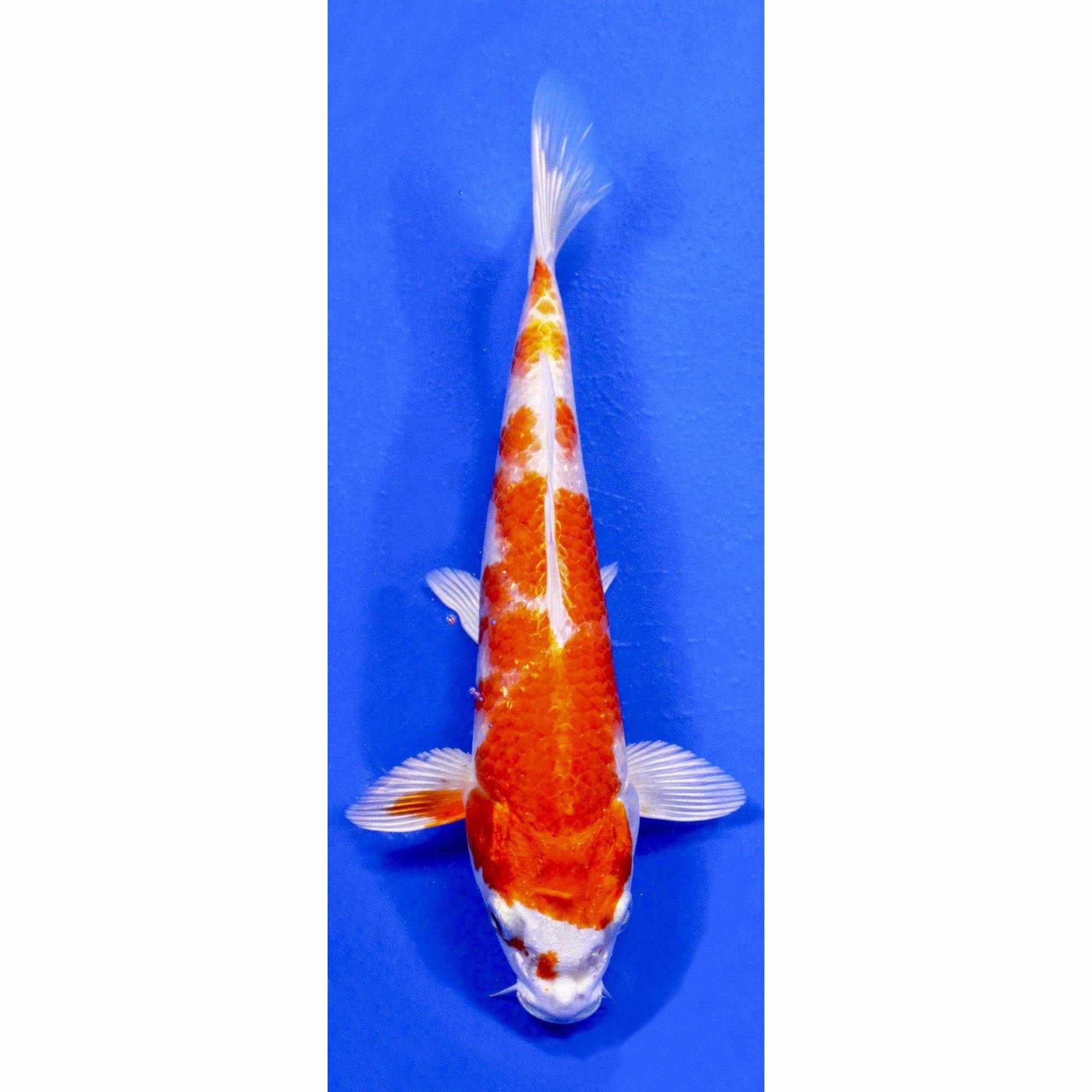
A Hariwake is a two-color metallic koi: a platinum-white base with yellow or orange laid over the top. What it does not have is netting, and that single absence is what separates it from a Kujaku.
This guide covers what a hariwake koi fish is, how it is classified, how to judge one, and how to keep one in a backyard pond.
Hariwake koi at a glance
| What it is | Two-color metallic koi: platinum-white ground with yellow or orange markings, no black |
| Show class | Hikarimoyo, for metallic koi carrying more than one color |
| The Kujaku test | Hariwake has no matsuba netting in the scales; Kujaku does |
| Main forms | Lemon Hariwake (pale yellow) and orange-marked fish; the Doitsu form is listed as Kikusui |
| Adult size | Commonly 24 to 28 inches in a well-run pond |
| Lifespan | Twenty-five to thirty-five years is the range usually cited |
What is a Hariwake koi, and how is it classified?
A metallic koi wearing two colors: a bright platinum-white ground with yellow or orange markings on it. It benches in Hikarimoyo, the class for metallic koi carrying more than one color. Single-color metallics bench in Hikarimuji instead, and our complete guide to Yamabuki Ogon covers that side of the family. Listings are careless about word order, selling the same fish as a hariwake koi and as a koi hariwake, so search both ways.
The color patterns that define a Hariwake
The platinum should read as bright white metal from nose to tail, not cream and not gray, with the yellow or orange sitting on it in defined blocks. A lemon hariwake koi is the pale-yellow form; orange-marked fish read hotter and show the boundary more sharply. What a Hariwake never carries is matsuba netting, the dark shading inside each scale that gives a pinecone effect. Put netting on the same fish and you have a Kujaku rather than a koi hariwake. Black does not belong either.
Doitsu versions are common, and a doitsu lemon hariwake is that pale-yellow form on Doitsu scaling. Doitsu does not mean bare skin: the fish carries enlarged mirror scales in limited rows, along the dorsal line and often the lateral line too, with smooth skin between them. The orange-marked Doitsu Hariwake is usually sold as a Kikusui; the pale-yellow one keeps the Doitsu Lemon Hariwake name. Sellers are inconsistent, so read the photograph rather than the label, so read the photograph rather than the label.
How a Hariwake differs from the Gosanke most people picture
The premise needs correcting: Hariwake is a show variety with its own class, so it is not outside the show system. What people mean is how it differs from Gosanke. Those are judged largely on pattern placement and edge quality, while a Hariwake is judged first on the metal, so a dull fish with a lovely pattern is still a poor one. And with no black to develop, a young Hariwake is closer to what you keep than a young Showa ever is.
Where Hariwake come from
Less is documented than sellers imply. Hariwake belongs to the metallic family that grew out of Ogon-line breeding, which is where the platinum ground comes from. Beyond that we will not hand you a founding breeder and a date, because the accounts in circulation are hobbyist tradition rather than record. When a hariwake koi fish is advertised with a bloodline name, that name is almost always the farm that raised it. Treat it as a reputation, not a pedigree.
How to tell a good Hariwake
Body first: thickness through the shoulder, symmetry from above, a strong caudal peduncle. Then the metal. Luster should be even from head to tail and carry onto the fins, and head luster is the hardest trait to fix and the first to fail, so check there first. The platinum wants to be cold white with no yellow bleeding into it, which matters most on a lemon hariwake koi, where the two colors sit close in tone. Confirm there is no netting in the scales if you are paying a Hariwake price.
The right pond for a Hariwake
Nothing variety-specific: volume for the adult fish rather than the one you are buying, filtration sized above your bioload, steady water movement, and depth enough that winter temperatures move slowly. Metallic koi do reward light and shade together. Some direct light makes the metal do what you paid for, while shade over part of the surface spares a bright ground a whole summer of hard sun.
Water parameters for a healthy Hariwake
Ammonia and nitrite at zero, nitrate low, pH stable somewhere around 7.0 to 8.5, dissolved oxygen high and moving. Stability matters more than any single number. The bright ground doubles as an early gauge, since sustained poor water dulls luster before a fish looks unwell, but read it as a slow signal rather than a monitor: an oxygen crash does its damage in hours.
How big do Hariwake get?
A hariwake koi fish commonly reaches 24 to 28 inches in a well-run pond, with exceptional individuals beyond that. Volume, stable temperature and consistent feeding decide growth far more than variety does, and most backyard ponds produce fish nearer the lower end of that range.
How long do Hariwake live?
Twenty-five to thirty-five years is the range usually cited for well-kept koi, and metallic varieties are not shorter-lived than patterned ones. Husbandry decides it, and a typical backyard pond, with its temperature swings and stocking pressure, tends to fall short of the top of that range.
Feeding a Hariwake for color and growth
A quality staple pellet year-round, fed by water temperature rather than by the clock: two to four small feeds a day in warm water, each no more than the fish clear in about five minutes, tapering as the pond cools and stopping below roughly 50F. Wheat germ suits cooler water. Color food needs a lighter hand here than on most koi, because it deepens the yellow but the same pigments warm a white ground toward cream, and the platinum is half the fish.
Where to buy Hariwake koi from us
Straight answer: we do not have Hariwake in stock right now. We would rather say so than steer you toward something adjacent and hope you do not notice once it is in your pond.
Watch the Japanese koi selection for what is listed today, and if a Lemon Hariwake or a doitsu lemon hariwake is what you want, tell us through our contact form and we will let you know when one lands. Metallic koi arrive in ones and twos, so a standing request beats checking back.
Whatever you buy, two conditions, and neither is optional. Quarantine every new koi in a separate, filtered, aerated holding system for two to four weeks before it goes anywhere near your main pond. And stock to the adult size your volume and filtration can carry, rather than to the size the fish arrive at.
Frequently asked questions
What is hariwake koi and how is it classified?
A two-color metallic koi: a platinum-white ground with yellow or orange markings and no black. It is classified in Hikarimoyo, the class for metallic koi carrying more than one color. Single-color metallics such as Yamabuki Ogon bench in Hikarimuji.
What are the distinguishing colour patterns of hariwake koi?
Bright platinum-white overlaid with yellow or orange in defined blocks. A lemon hariwake koi is the pale-yellow form; a doitsu lemon hariwake is that pattern on Doitsu scaling. There is no matsuba netting and no black, and netting would make it a Kujaku.
How do hariwake koi differ from show-standard koi varieties?
They are not outside the show standard, since Hariwake is judged in its own class. Against the Gosanke most people picture, the difference is what gets judged: metal quality and a clean platinum ground come first, and with no sumi to develop, a young fish changes less than a young Showa.
What are the common bloodlines or origins of hariwake koi?
Hariwake comes out of the metallic breeding associated with the Ogon line, which is where the platinum ground originates. Beyond that, founding names and dates are hobbyist tradition rather than record. A bloodline on a listing is usually the farm that raised the fish.
How can you tell a high-quality hariwake koi?
Body shape first, then even luster from head to tail and onto the fins, with particular attention to the head, where metal fails first. The platinum should be cold white rather than creamy, the markings evenly dense, and the scales free of netting.
What is the ideal pond environment for keeping hariwake koi?
An ordinary well-built koi pond: volume sized to the adult fish, filtration above your bioload, steady water movement, and depth enough to buffer winter. Some direct light shows the metal at its best, with shade over part of the surface through summer.
What water parameters are best for hariwake koi health?
Zero ammonia and nitrite, low nitrate, stable pH around 7.0 to 8.5, and high dissolved oxygen. Stability beats any single target. Dulling luster is a useful early warning, but test the water rather than waiting for the fish to tell you.
How large do hariwake koi typically grow?
Commonly 24 to 28 inches in a well-run pond, occasionally more. Volume, steady temperature and consistent feeding set growth far more than variety does, and most backyard ponds produce less.
What is the typical lifespan of a hariwake koi?
Twenty-five to thirty-five years is the range usually cited for well-kept koi. Metallic varieties are not shorter-lived than patterned ones, and most backyard ponds land below the top of that range.
What should you feed hariwake koi for optimal colour and growth?
A quality staple pellet year-round, wheat germ in cooler water, fed to temperature and only what the fish clear in about five minutes. Use color food sparingly: it deepens the yellow but warms the platinum toward cream, which on a koi hariwake trades away half of what you bought.