

Descripción
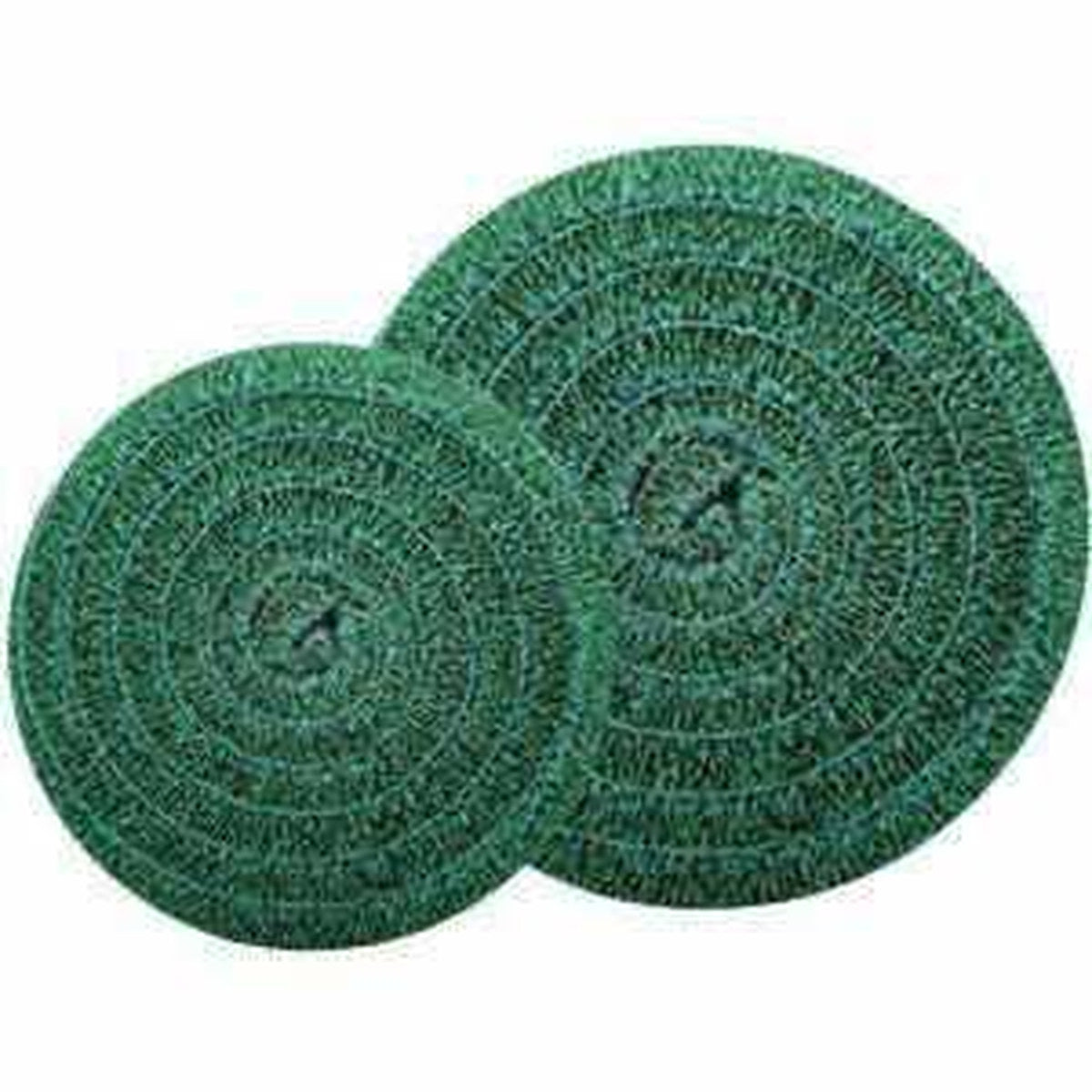
Rollo Matala Verde de 6 Pulgadas de Grosor
R-Matala, el medio filtrante "drop in" perfecto para filtros Vortex y filtros de barril. R-Matala tiene las mismas cualidades que las láminas de Matala pero está formado en un cartucho precortado enrollado. Simplemente seleccione el diámetro del rollo y la densidad que necesita para su tanque redondo y colóquelo. Las bobinas de R-Matala no están diseñadas para desenrollarse.
VERDE DE DENSIDAD MEDIA
El Green R-Matala atrapa partículas de tamaño mediano. Se limpian muy fácilmente con solo sacudirlas antes de vaciar el sumidero y luego usar la manguera del jardín para limpiarlas. La suciedad se desprende muy fácilmente.
El Green R-Matala funciona como un prefiltro para la sección biológica. El medio filtrante verde elimina las partículas de suciedad antes de que lleguen a la sección biológica. El Green Matala también puede funcionar como un filtro biológico ligero debido a su área de superficie disponible para la fijación de bacterias.
El R-Matala se encajará en su lugar de forma natural sin necesidad de ningún tipo de apoyo. Sin embargo, debe medir el diámetro interior de su tanque y pedir el tamaño de bobina que se ajuste bien. Si la bobina queda demasiado suelta, el agua fluirá alrededor de las almohadillas en lugar de a través de ellas. Se pueden emplear perfectamente cuatro densidades secuenciales para lograr la máxima cantidad de sólidos y biofiltración. Cada rollo tiene 6 pulgadas de espesor y un enorme potencial para atrapar la suciedad, pero es muy fácil de limpiar. Simplemente drene los desechos por el desagüe inferior y vierta suavemente el agua del estanque sobre el R-Matala.
Los medios Matala funcionan perfectamente con diseños de filtros de flujo ascendente. La configuración ideal de flujo ascendente sería el R-Matala negro o verde en la parte inferior del filtro para capturar las partículas grandes. La siguiente capa debe ser el R-Matala azul para que actúe como un filtro biológico y filtre partículas de tamaño mediano. La capa final será el R-Matala gris para la filtración biológica de gran área de superficie y la eliminación de partículas finas. Si solo tiene espacio para tres capas de R-Matala, le sugerimos que use el negro en la parte inferior seguido del azul y el gris.
Nota: debido al costo de envío, TODAS LAS VENTAS DE MEDIOS FILTRANTES SON FINALES.
Gastos estimados de envío
Pago y seguridad
Su información de pago se procesa de forma segura. No almacenamos los detalles de la tarjeta de crédito ni tenemos acceso a la información de su tarjeta de crédito.
Bio media sizing
How much bio media does your pond need?
Ammonia comes from food, so that's where sizing starts. Tell us how much you feed and how warm the water runs — we'll size every media we carry against it.
1 How much do you feed?
2 How warm is the water?
Fine tuning
optionalMost koi diets run 35–40% protein — check your bag. Chamber fill only matters for moving-bed media like K1 or K+; aim for 50–65% so the media can actually tumble.
Design R is how many grams of ammonia one square metre of mature biofilm clears in a day. It is the divisor in this whole calculation — the single biggest lever on the answer.
R is not a property of the media. It's a property of the conditions: water temperature, dissolved oxygen, how briskly water moves across the biofilm, and how mature the bacterial colony is. The same K1 bead clears several times more ammonia in a well-aerated moving bed at 75°F than it does sitting in a static box at 50°F.
Because R divides, a lower R means more media. Choosing a conservative R is how you buy yourself safety margin.
What 0.50 assumes
Not all the nitrogen in food becomes ammonia — some is built into fish growth, some leaves as solids you skim out. This is the share that reaches the water column. 0.75 suits most ponds.
Every media compared
How much food goes in
Everything starts here. Food is the only meaningful source of ammonia in a koi pond, so what you feed sets the size of the biofilter you need.
How much ammonia that produces
Protein is about 16% nitrogen by weight. Only part of that nitrogen reaches the water as TAN — total ammonia nitrogen — because fish retain some as growth and some leaves as solids.
How much biofilm surface that needs
R is the nitrification rate — the ammonia one square metre of biofilm clears per day. Cold water and low oxygen slow the bacteria down, which is why a cold pond needs more media, not less.
How much media that is
Each media has a specific surface area — the square metres of usable biofilm surface packed into a cubic metre. Divide the surface you need by that figure and you have the volume to buy.
Oxygen the biofilter consumes
Nitrification burns roughly 4.6 g of oxygen per gram of ammonia processed. Warm water holds less dissolved oxygen exactly when demand peaks — so if you run warm, add aeration or size using a lower R.
Alkalinity the biofilter consumes
Each gram of ammonia processed also consumes about 7.1 g of carbonate hardness. Keep KH in the 100–150 mg/L range; if it falls, pH turns unstable and the filter stalls.
How KH gets used up, and what it takes to hold it steady →
A note on accuracy. Figures marked Verified are published by the manufacturer. Figures marked Estimated are derived from a published total surface area or from media geometry. Sizing a biofilter is a design exercise, not a precise measurement — when in doubt, size up.