


Descripción
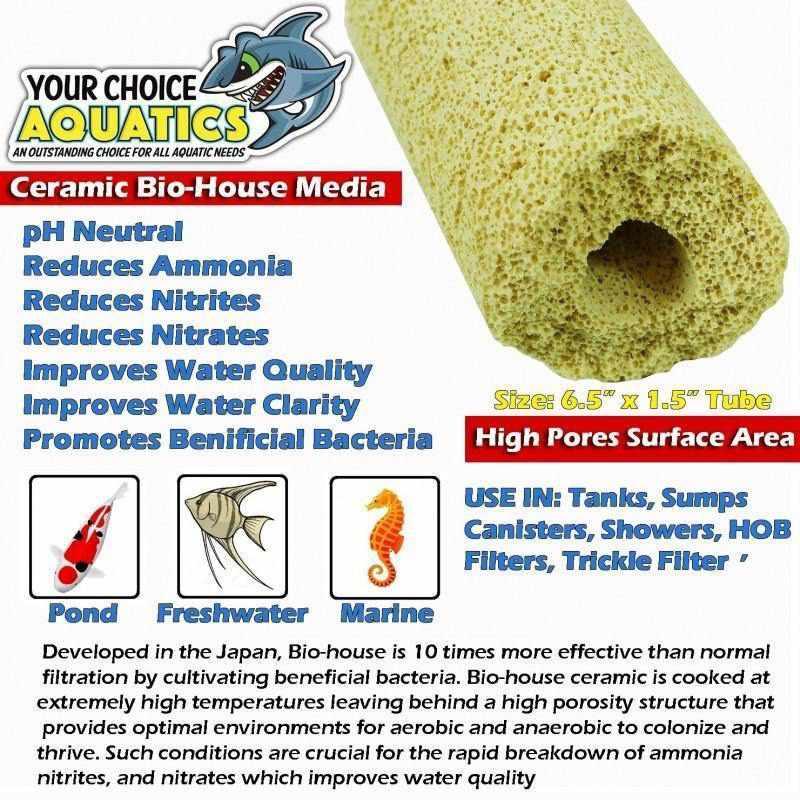
Este es el medio filtrante biológico para casa de bacterias de cerámica SeaSide Aquatics diseñado para duchas Bakki. Este medio filtrante económico es una excelente alternativa al medio filtrante para casa de bacterias Momotaro o Ceramedia, que es más costoso, a una fracción del costo sin sacrificar el rendimiento.
Características:
- Absorbe el agua rápidamente por toda la longitud del medio filtrante y luego la retiene bastante bien. Una vez lleno, pesa aproximadamente 3 o 4 veces más que cuando está seco, lo que contribuye a sus grandes capacidades de desnitrificación.
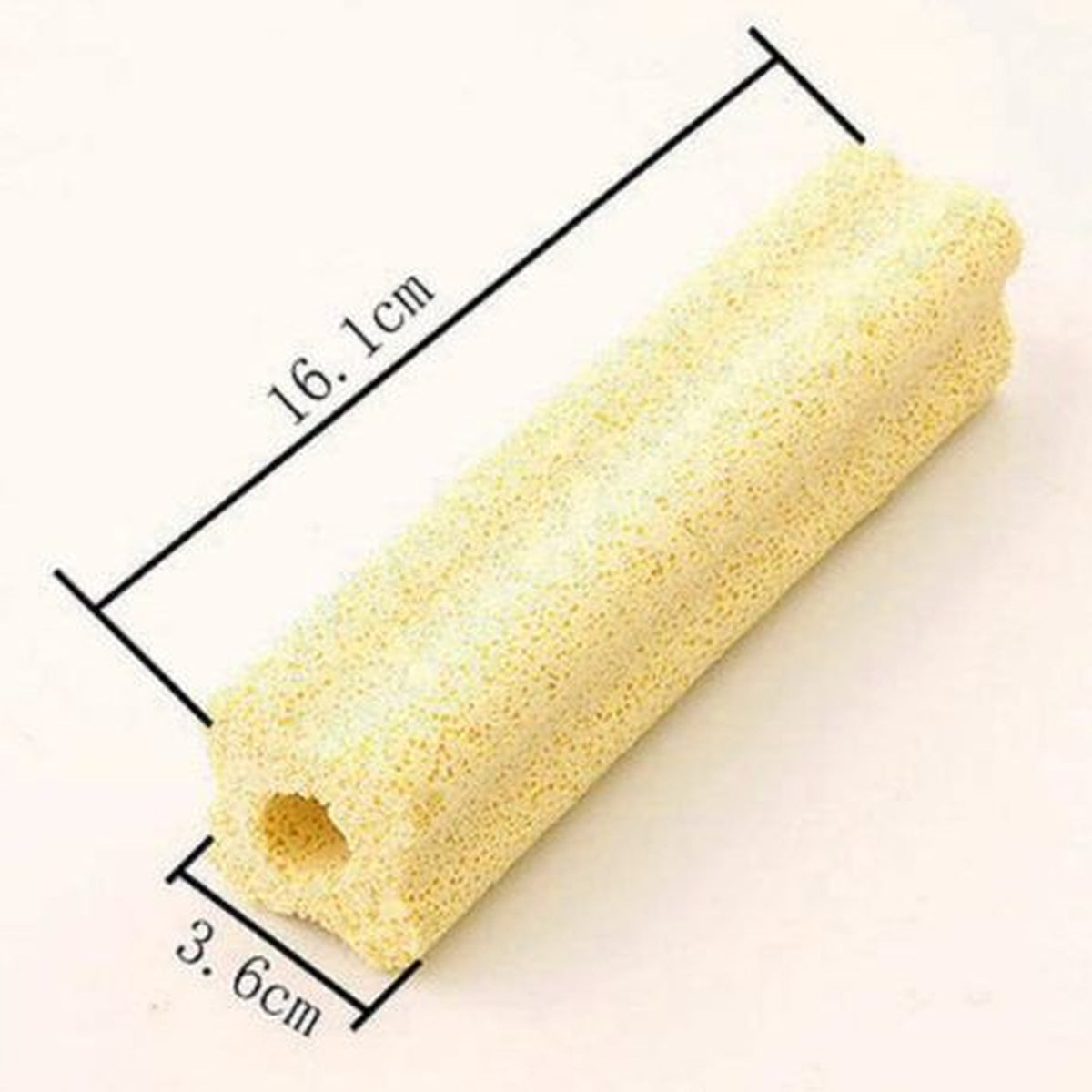
- Cada pieza mide aproximadamente 6,25" de largo por 1,5" de diámetro.
- ¡El MEJOR medio biológico ABSOLUTAMENTE disponible por el precio!
- Fabricado con material cerámico duradero y altamente poroso.
- pH neutro: adecuado tanto para filtros de agua dulce como salada.
- Acelera eficazmente el desarrollo de microorganismos; elimina amoniaco y nitritos.
- 10 veces más eficaz que los medios de filtración normales al cultivar bacterias beneficiosas.
- Cocinado a temperaturas extremadamente altas, deja una estructura altamente porosa que proporciona un ambiente óptimo para que las bacterias beneficiosas aeróbicas y anaeróbicas colonicen y prosperen.
- Para usar en duchas Bakki, filtros de goteo, filtros de ducha, sumideros, tanques y otros filtros.
2 opciones de tamaño disponibles:
.05 pies cúbicos - Medios de cultivo para bacterias pequeñas Bakki Shower H-1
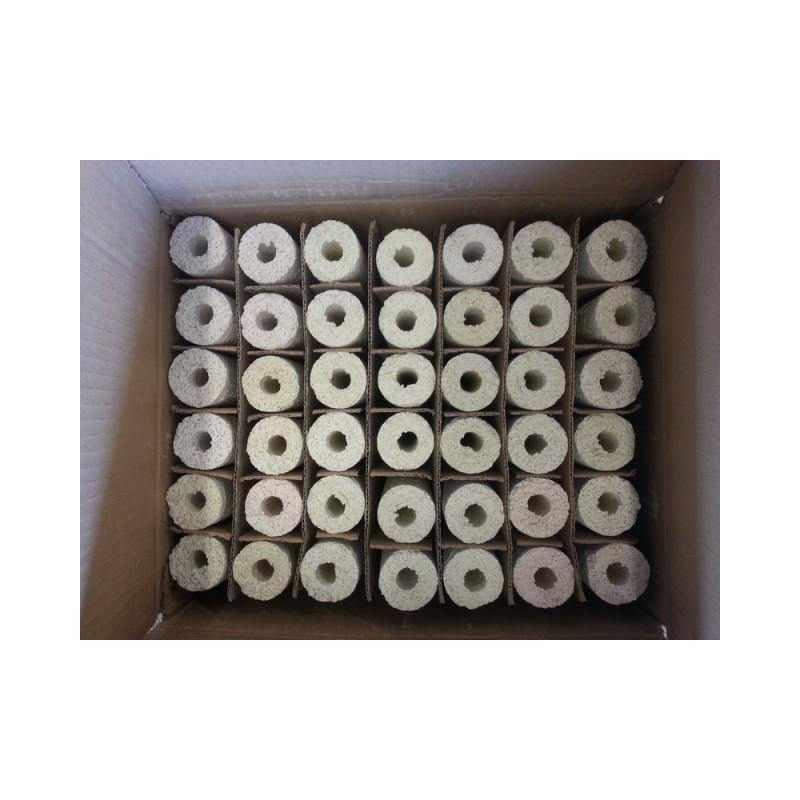
- Aproximadamente 0,5 pies cúbicos. Viene en una caja de aproximadamente 12" x 12" x 8"
- Cada caja contiene aproximadamente 49 piezas de medios dentro de la caja.
1,6 pies cúbicos - Caja principal de medios de ducha Bakki para casas de bacterias grandes H-1
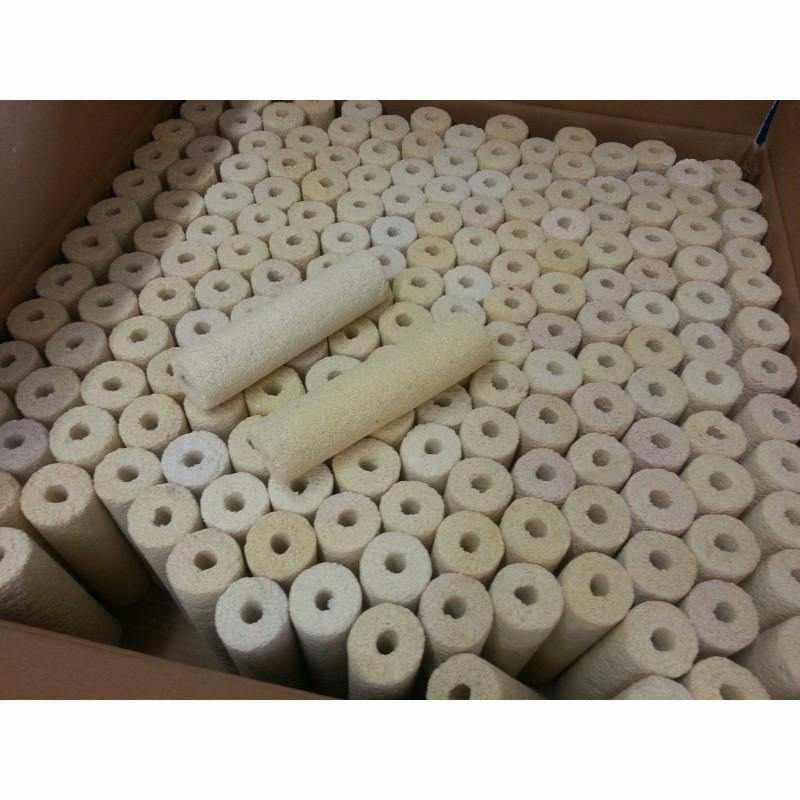
- Aproximadamente 1,5 a 1,6 pies cúbicos. Viene en una caja de aproximadamente 22,5" x 17,5" x 8"
- Cada caja contiene aproximadamente 154 piezas de medios dentro de la caja.
Importante: cada caja se empaquetará a mano antes de enviarla. Sin embargo, el medio filtrante es muy frágil y es muy probable que haya algunas piezas rotas en el envío. Tenga la seguridad de que el medio filtrante roto no afecta su capacidad de filtración.
Gastos estimados de envío
Pago y seguridad
Su información de pago se procesa de forma segura. No almacenamos los detalles de la tarjeta de crédito ni tenemos acceso a la información de su tarjeta de crédito.
Bio media sizing
How much bio media does your pond need?
Ammonia comes from food, so that's where sizing starts. Tell us how much you feed and how warm the water runs — we'll size every media we carry against it.
1 How much do you feed?
2 How warm is the water?
Fine tuning
optionalMost koi diets run 35–40% protein — check your bag. Chamber fill only matters for moving-bed media like K1 or K+; aim for 50–65% so the media can actually tumble.
Design R is how many grams of ammonia one square metre of mature biofilm clears in a day. It is the divisor in this whole calculation — the single biggest lever on the answer.
R is not a property of the media. It's a property of the conditions: water temperature, dissolved oxygen, how briskly water moves across the biofilm, and how mature the bacterial colony is. The same K1 bead clears several times more ammonia in a well-aerated moving bed at 75°F than it does sitting in a static box at 50°F.
Because R divides, a lower R means more media. Choosing a conservative R is how you buy yourself safety margin.
What 0.50 assumes
Not all the nitrogen in food becomes ammonia — some is built into fish growth, some leaves as solids you skim out. This is the share that reaches the water column. 0.75 suits most ponds.
Every media compared
How much food goes in
Everything starts here. Food is the only meaningful source of ammonia in a koi pond, so what you feed sets the size of the biofilter you need.
How much ammonia that produces
Protein is about 16% nitrogen by weight. Only part of that nitrogen reaches the water as TAN — total ammonia nitrogen — because fish retain some as growth and some leaves as solids.
How much biofilm surface that needs
R is the nitrification rate — the ammonia one square metre of biofilm clears per day. Cold water and low oxygen slow the bacteria down, which is why a cold pond needs more media, not less.
How much media that is
Each media has a specific surface area — the square metres of usable biofilm surface packed into a cubic metre. Divide the surface you need by that figure and you have the volume to buy.
Oxygen the biofilter consumes
Nitrification burns roughly 4.6 g of oxygen per gram of ammonia processed. Warm water holds less dissolved oxygen exactly when demand peaks — so if you run warm, add aeration or size using a lower R.
Alkalinity the biofilter consumes
Each gram of ammonia processed also consumes about 7.1 g of carbonate hardness. Keep KH in the 100–150 mg/L range; if it falls, pH turns unstable and the filter stalls.
How KH gets used up, and what it takes to hold it steady →
A note on accuracy. Figures marked Verified are published by the manufacturer. Figures marked Estimated are derived from a published total surface area or from media geometry. Sizing a biofilter is a design exercise, not a precise measurement — when in doubt, size up.