
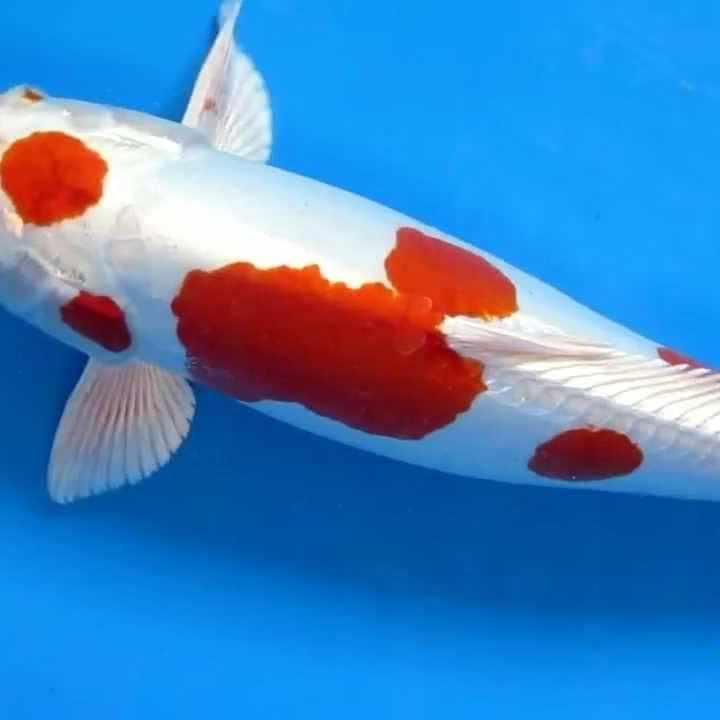
Kikusui means water chrysanthemum, and the name is the description: orange running down a polished platinum back, breaking over smooth skin like a flower opening on water.
This guide covers what a kikusui koi fish is, how to tell one from a Hariwake, what it needs from your pond, and the one pack we list with kikusui koi for sale.
Kikusui koi at a glance
| The name | Water chrysanthemum |
| What it is | The Doitsu, metallic form of Hariwake |
| Colors | Metallic platinum base with deep orange markings; the yellow Doitsu Hariwake is sold as Doitsu Lemon Hariwake |
| Scales | Mirror scales in limited rows along the dorsal line, often the lateral line too, on otherwise smooth skin |
| Breeding | Kikusui koi breeding crosses metallic Hariwake lines into Doitsu stock |
| Buying in | Mixed metallic packages from $225. Quarantine every arrival and stock to the adult size your pond can carry |
Where Kikusui came from
Japan's mid-twentieth century metallic lines, the Ogon breeding behind Hariwake, crossed into Doitsu stock. Kikusui koi breeding still works that way. Sources disagree on dates, so treat any single year as approximate.
How to identify one
A kikusui koi fish is Hariwake in Doitsu dress: metallic platinum ground with deep orange markings, and mirror scales in limited rows down the dorsal line and often the lateral line. Fully scaled, it is a Hariwake.
The color pattern
Platinum white under orange, sometimes yellow, usually running the length of the back. With no scale texture over the smooth skin, edges read hard and clean, and a smudge has nowhere to hide.
Are they show koi?
Yes, a recognized variety benched with the metallic patterned koi, though some shows judge Doitsu separately.
Size
Trade sources put a well-kept koi at 24 to 28 inches, exceptional fish beyond. Most backyard ponds produce less.
Lifespan
Trade accounts cite 25 to 35 years in a well-run pond, with older fish reported. Water quality and a stable winter decide it, not the variety.
Water conditions
Stable temperature, no ammonia or nitrite, dependable oxygen, filtration ahead of your bioload. Add partial shade, since most of a kikusui koi fish has no scale cover.
Feeding for color and growth
A quality staple fed to water temperature does most of it. Color foods can deepen the orange, but heavy use can tint a white ground. Trade experience, not a rule.
Mixing with other varieties
No issue. All koi are one species. Add fish of similar size so the smaller ones are not pushed off the food.
Health
Smooth skin shows scrapes and net marks early, so smooth rockwork, a soft net and good water matter more than usual. If a mark does not settle, get a proper diagnosis rather than guessing.
Where to buy Kikusui koi from us
One route right now, and the tag data says it is the only one:
- Kanno Koi Farm Metallic and Ginrin Tosai Packages, from $225 for five 5 to 6 inch koi, or $39.50 a fish in the ten-koi box. This is the pack we tag for Kikusui, spelled Kikisui on the listing.
Single Kikusui are not in stock as we write this, so packages are where kikusui koi for sale sit today. Each pack is a unique metallic and ginrin assortment rather than a Kikusui-only box, so treat the Kikusui content as likely rather than promised, and browse the Japanese koi selection for what is listed now. Before any multi-fish order, quarantine every new koi in a separate, filtered, aerated holding system for two to four weeks, and stock to the adult size your volume and filtration can carry.
Frequently asked questions
What is the history of kikusui koi?
Japan's mid-twentieth century metallic lines, the Ogon breeding behind Hariwake, crossed into Doitsu stock. Kikusui koi breeding still follows that route. Dates vary between sources.
How can I identify a kikusui koi?
Metallic platinum base with deep orange markings; the yellow Doitsu Hariwake is sold as Doitsu Lemon Hariwake, and mirror scales in limited rows down the dorsal line and often the lateral line, with smooth skin between. Fully scaled, it is a Hariwake.
What are the distinguishing colour patterns of kikusui koi?
A platinum white ground with orange, less often yellow, usually running the length of the back, and reading with hard, clean edges.
Are kikusui koi considered a variety of show koi?
Yes, judged with the metallic patterned koi, though some shows bench Doitsu separately. Most kikusui koi for sale at tosai size are pond fish rather than show prospects.
What size do kikusui koi typically reach?
Trade sources cite 24 to 28 inches in a well-run pond. A typical backyard pond produces less.
How long do kikusui koi live in a pond?
Commonly 25 to 35 years by trade accounts, with older fish reported. Stable water matters more than the variety.
What water conditions do kikusui koi prefer?
Stable temperature, no ammonia or nitrite, strong oxygenation, filtration above your stocking level, plus partial shade.
How should I feed kikusui koi for best colour and growth?
A quality staple fed to water temperature. Color foods can strengthen the orange, but heavy use can tint the platinum ground. Trade experience, not a rule.
Can kikusui koi be kept with other koi varieties?
Yes, with any other koi and without special handling. Introduce fish of similar size.
What common health issues affect kikusui koi?
The same ones any koi faces. Smooth skin shows damage early, so smooth edges and a soft net pay off. Any new mark deserves a proper diagnosis.