
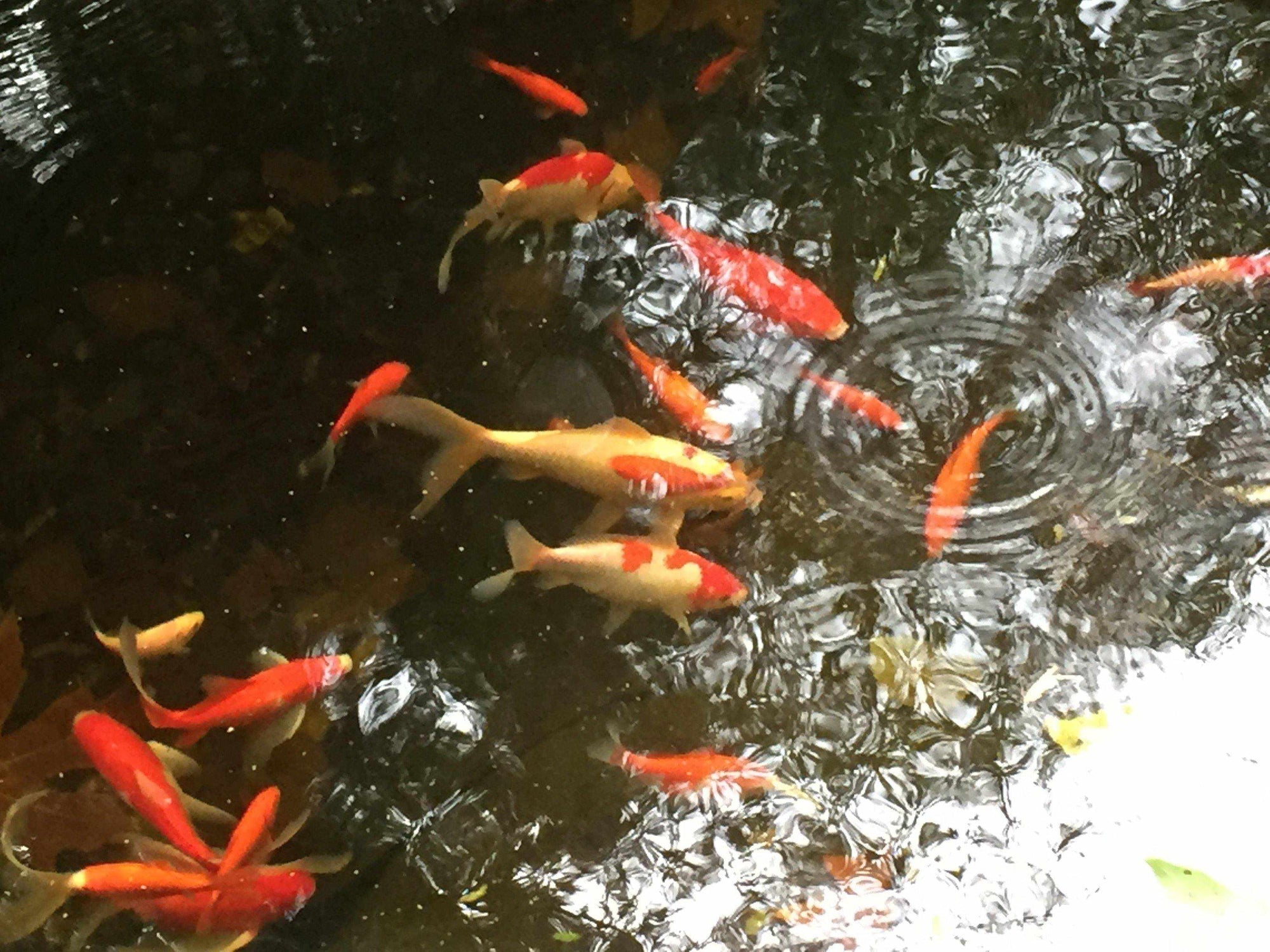
Know that Koi are expensive and Goldfish are not; catfish and turtles are a no-no; and predators such as otter, heron, raccoons and others may eat these fish. They are a wonderful addition to your pond! NOTE: This is only the “basics” of Goldfish and Koi. There is much more detailed info to come in later articles.
History: Both fish were developed in ancient China. Goldfish are likely descended from Prussian carp. Originally kept and bred as food, some showed gold and orange markings were selectively bred. In much the same way, Koi are descended from Amur carp. Also selectively bred for coloration in China, but perfected in Japan. Koi were bred specifically to be viewed from above, while goldfish from the side. By the 1600’s, goldfish has spread to Europe and 1870’s to the Americas. The outside world was unaware of the development of Japanese Koi until they were exhibited in 1914. Many variations exist in both fish. Koi live 20-50 years. Domestic breeds average 12-15” while Japanese Koi average 22-26”. Jumbo species can reach a whopping 34-36”. Goldfish average 4”, but can grow up to 7-8”, and in ideal conditions 12-18”. In most cases, Koi and Goldfish can exist in the same water feature, just note the size differences.
Adding New Koi or Goldfish: As previously discussed, use the rule of thumb to establish a population limit: Koi - allocate 35 gallons per inch of fish; Goldfish - allocate 20 gallons per inch (do not count tail fins). New fish may contain parasites or may be sick but not showing symptoms. Consider placing the new fish in a quarantine tank with some pond water mixed in for a few days; medicating as needed. Remove a few fish at a time to a bag with air until temped to the pond. See how well they do before adding more.
Overcrowding: Too many fish is a huge mistake. Fish grow, and looking into the water, it can be difficult to judge their size, especially Koi. In addition, fish can breed which is difficult to control. Having too many fish will be an issue due to increased waste, which encourages the spread of parasites due to organic waste overwhelming your filter system. Levels of ammonia can become too high, which naturally increase during the summer months (just when oxygen decreases) which causes loss of fish. Yes, you can increase filtration to support more fish, but if this fails, the time when fish go into distress is short. Just like people, fish without enough space to move and explore can become unhappy and unhealthy. Don’t overstock your pond!
Seasonal Feeding: In the summer, fish crave a protein-rich diet. This gives them the nutrients they need to grow and add mass. In the spring and fall, the fish will lack the digestive enzymes needed to break down their summer food, so you will want to switch to a wheat germ-based diet. This is a carbohydrate-heavy food which is easier for the fish to metabolize when water temperatures are between 40-50°F. As the water temperatures cool, reduce the quantity of food served as the fish will reduce their activity level and metabolism rate. Not only will it save you from skimming out what they do not eat, you will also have a cleaner pond since your fish will produce less waste. When the water temperatures drop below 40°F, stop ALL feeding. The fish will not be able to process the food which can lead to complications as the food will rot in their stomach. Instead, the fish will live off their fat reserves they stored up during summer. In all cases, only provide enough food that the fish can eat in 5 to 10 minutes once a day. Note: Give treats such as oatmeal or oat-based cereal, veggies such as carrots, pumpkin or peas on occasion too.
Healthy Fish: Koi and Goldfish evolved from carp which are pretty hearty freshwater fish. They can endure cold water to warm and even can overwinter in ponds. A fish’s immune system can weaken from stress, environmental factors such as poor water quality and poor nutrition, making them susceptible to common fish diseases. This is why before adding fish; ensure the water feature has a sound water system with proper filtration. The more fish “load” you create, the more things can go south in a hurry. That’s why having the proper population with oversized filtration and oxygen will allow the fish to thrive. Just like any animal, fish can get sick from disease, parasites or from the environment. Thankfully, many are easy to identify and treat. If you create a healthy place for the fish to live, that’s half the battle!
Previous Article: 28: Pond Flora and Fauna – Wildlife
Next Article: Pond System Resilience – Risk Assessment
Table of Article Contents and Disclaimer