


Description
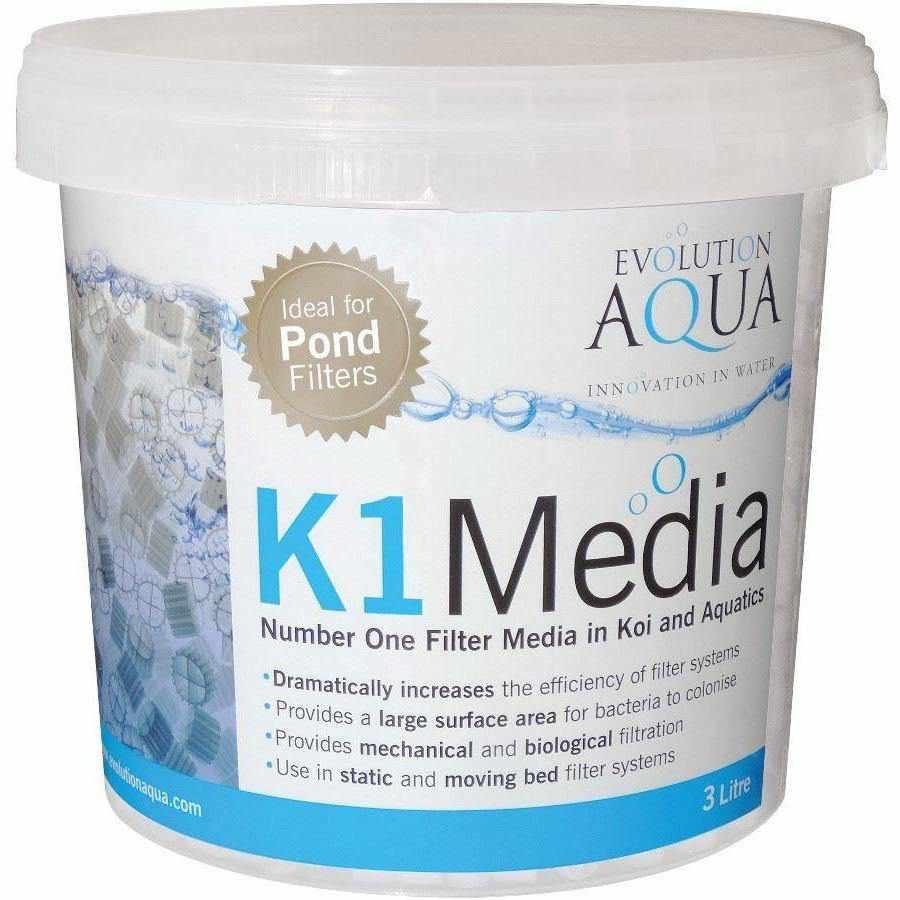
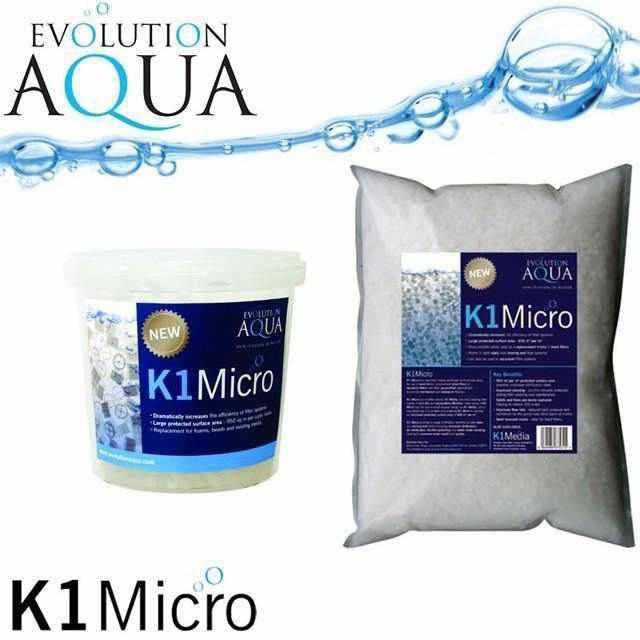
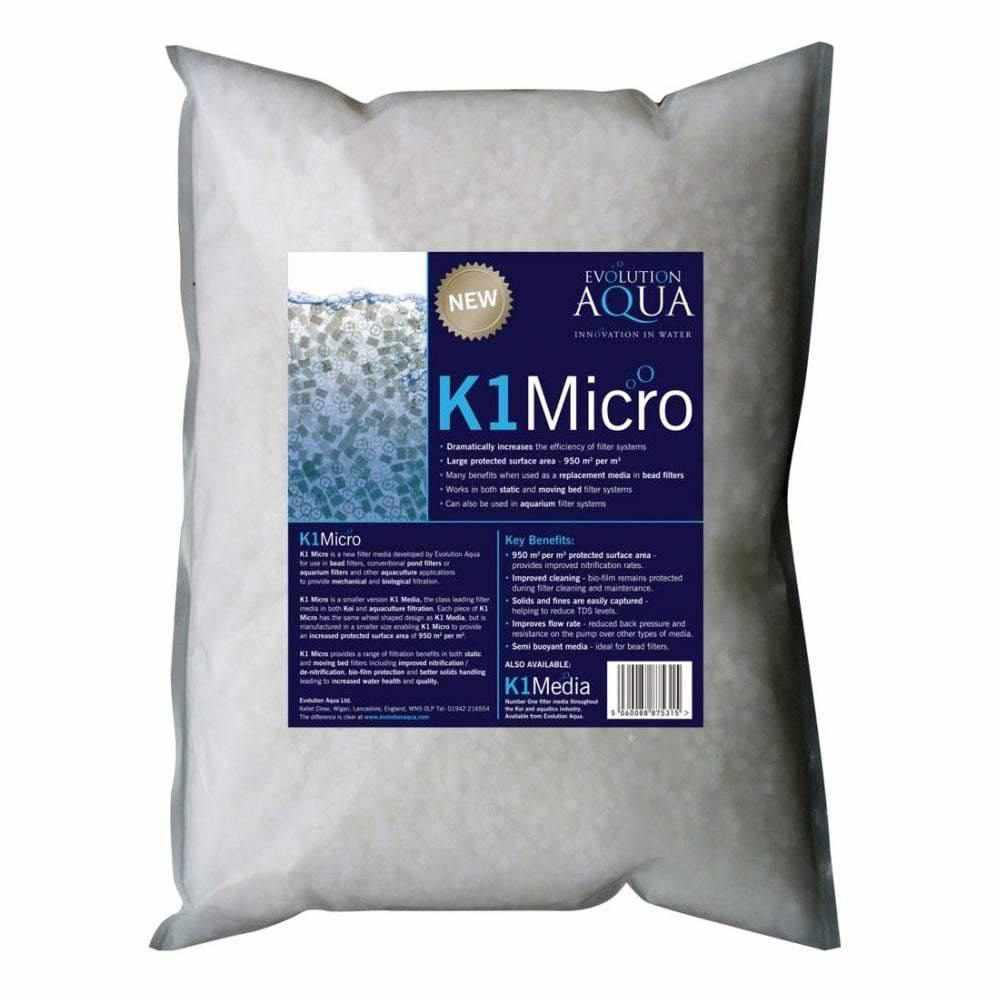
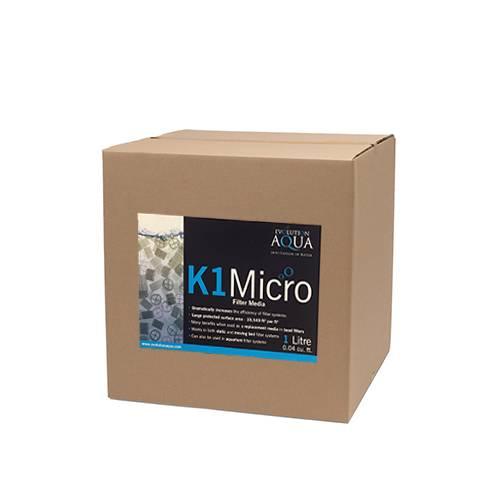
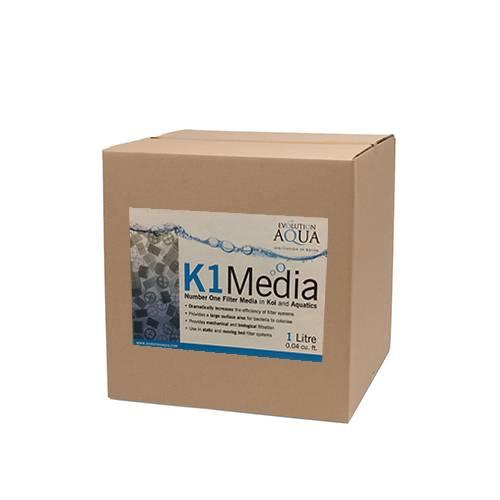
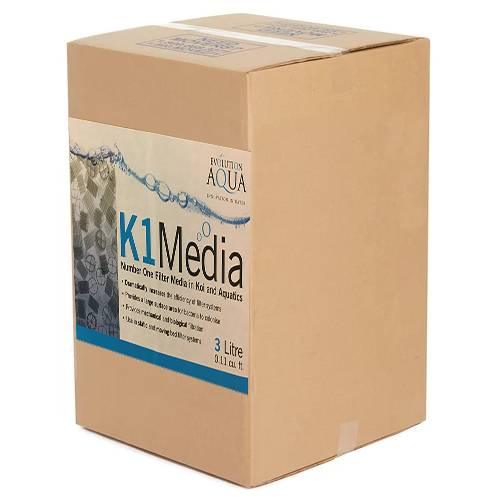
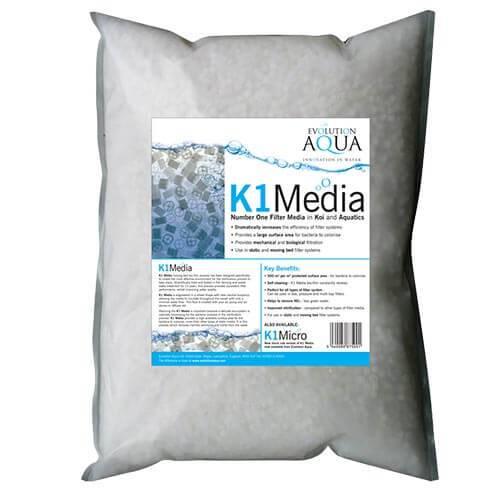
Evolution Aqua's K1 Media and K1 Micro Media are the long-standing champions in Biological filtration!
This media is specifically designed to be used as part of the fluidized bed filter - moving all of the time. Moving the water through it all of the time maximizes it's filtration capabilities. Originally designed to be used in the Nexus 220 and Nexus 320 filter units, this media can also be used in may other applications.
Maturing the K1 Media bio-media is important because a delicate eco-system is naturally developing for the bacteria involved in the nitrification process. K1 Media provides the maximum active surface area for the bacteria to colonize, more than other types of static media. It is this process which removes harmful ammonia and nitrite from the water.
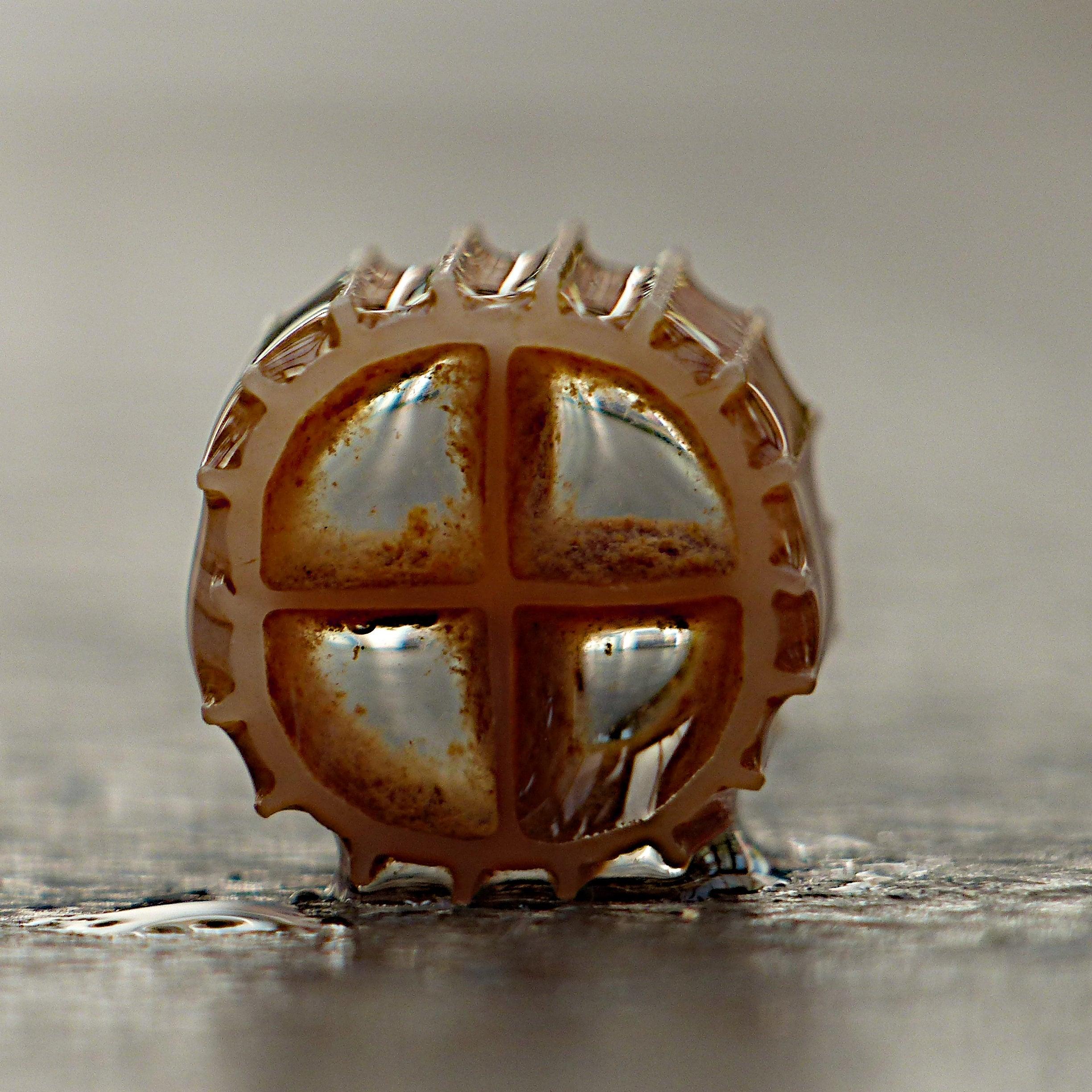
As the K1 Media moves within the filter, it causes the old dead bacteria on the outside to be displaced. This makes space for new younger heavier feeding bacteria to rapidly colonize. Within the wheel is a protected surface which enables colonies of bacteria to naturally follow their lifecycle, of maturing, dying and then fueling the latter stages of the nitrification cycle. K1 Media has been designed to provide the best possible habitat for both young and mature beneficial bacterial colonies.
Unlike foam, matting, or other forms of static filtration media, the K1 Media is designed to move freely within your filter. The constant chaotic movement of the air from your pump, causes the media to self-clean and thus requires no maintenance. This allows the filter to reach optimum effectiveness without the disturbance of periodic cleaning, avoiding unnecessary loss of bacteria within the filter. 50 Liters of K1 media will handle up to 250 grams of food per day and for K3, 225 grams of food per day. For retrofit of existing filters, K3 media is the most suitable due to its larger size and ease of control.
The more food you give to them, the darker it gets as it coats with a biofilm.
Estimate shipping
Payment & Security
Your payment information is processed securely. We do not store credit card details nor have access to your credit card information.
Bio media sizing
How much bio media does your pond need?
Ammonia comes from food, so that's where sizing starts. Tell us how much you feed and how warm the water runs — we'll size every media we carry against it.
1 How much do you feed?
2 How warm is the water?
Fine tuning
optionalMost koi diets run 35–40% protein — check your bag. Chamber fill only matters for moving-bed media like K1 or K+; aim for 50–65% so the media can actually tumble.
Design R is how many grams of ammonia one square metre of mature biofilm clears in a day. It is the divisor in this whole calculation — the single biggest lever on the answer.
R is not a property of the media. It's a property of the conditions: water temperature, dissolved oxygen, how briskly water moves across the biofilm, and how mature the bacterial colony is. The same K1 bead clears several times more ammonia in a well-aerated moving bed at 75°F than it does sitting in a static box at 50°F.
Because R divides, a lower R means more media. Choosing a conservative R is how you buy yourself safety margin.
What 0.50 assumes
Not all the nitrogen in food becomes ammonia — some is built into fish growth, some leaves as solids you skim out. This is the share that reaches the water column. 0.75 suits most ponds.
Every media compared
How much food goes in
Everything starts here. Food is the only meaningful source of ammonia in a koi pond, so what you feed sets the size of the biofilter you need.
How much ammonia that produces
Protein is about 16% nitrogen by weight. Only part of that nitrogen reaches the water as TAN — total ammonia nitrogen — because fish retain some as growth and some leaves as solids.
How much biofilm surface that needs
R is the nitrification rate — the ammonia one square metre of biofilm clears per day. Cold water and low oxygen slow the bacteria down, which is why a cold pond needs more media, not less.
How much media that is
Each media has a specific surface area — the square metres of usable biofilm surface packed into a cubic metre. Divide the surface you need by that figure and you have the volume to buy.
Oxygen the biofilter consumes
Nitrification burns roughly 4.6 g of oxygen per gram of ammonia processed. Warm water holds less dissolved oxygen exactly when demand peaks — so if you run warm, add aeration or size using a lower R.
Alkalinity the biofilter consumes
Each gram of ammonia processed also consumes about 7.1 g of carbonate hardness. Keep KH in the 100–150 mg/L range; if it falls, pH turns unstable and the filter stalls.
How KH gets used up, and what it takes to hold it steady →
A note on accuracy. Figures marked Verified are published by the manufacturer. Figures marked Estimated are derived from a published total surface area or from media geometry. Sizing a biofilter is a design exercise, not a precise measurement — when in doubt, size up.