
So you have planned out the major components of your pond which will meet or exceed the main pool. What else will you need or have to consider? There are a number of important items that are required and included so it’s easy to operate and maintain your water feature.
Electricity: Your pond was probably placed somewhere where there it is not readily available for things like your pump, lighting, aerator, UV clarifier, etc. Running all these components off extension cords is usually not a good idea either. At a minimum, a GFI protected 20-amp circuit with a weatherproof in-use outlet is ideal (hopefully on its own circuit) with feeder wiring sized at 12-gauge. Add up all components, usage should not exceed 80% of the line (16 amps). If so, or you have large HP pumps, it may demand 220v. Follow all codes and safety protocols or hire a qualified electrician for your power needs.
Waste Lines: When removing the water from your water feature, you have to have a place for that water to go. You may need to install a French drain or connect to existing downspout drains, etc. You don’t want to drain water near you house foundation or across septic fields either. If you have ground vaults housing equipment, you want storm drains within to keep them dry. If the pond overflows for one reason or another, you want to make provisions to divert this water safely away from your pond as well.
Fill Lines: Dragging a hose over to your pond will become tiresome very quickly and is not very efficient. A dedicated line perhaps off your spigot or its own plumbed water line would be better. Adding flow controls will greatly help you: on/off valve, a water flow timer, a water meter and an auto-fill valve would all be helpful to perform water changes, measuring or just keeping the pond topped off.
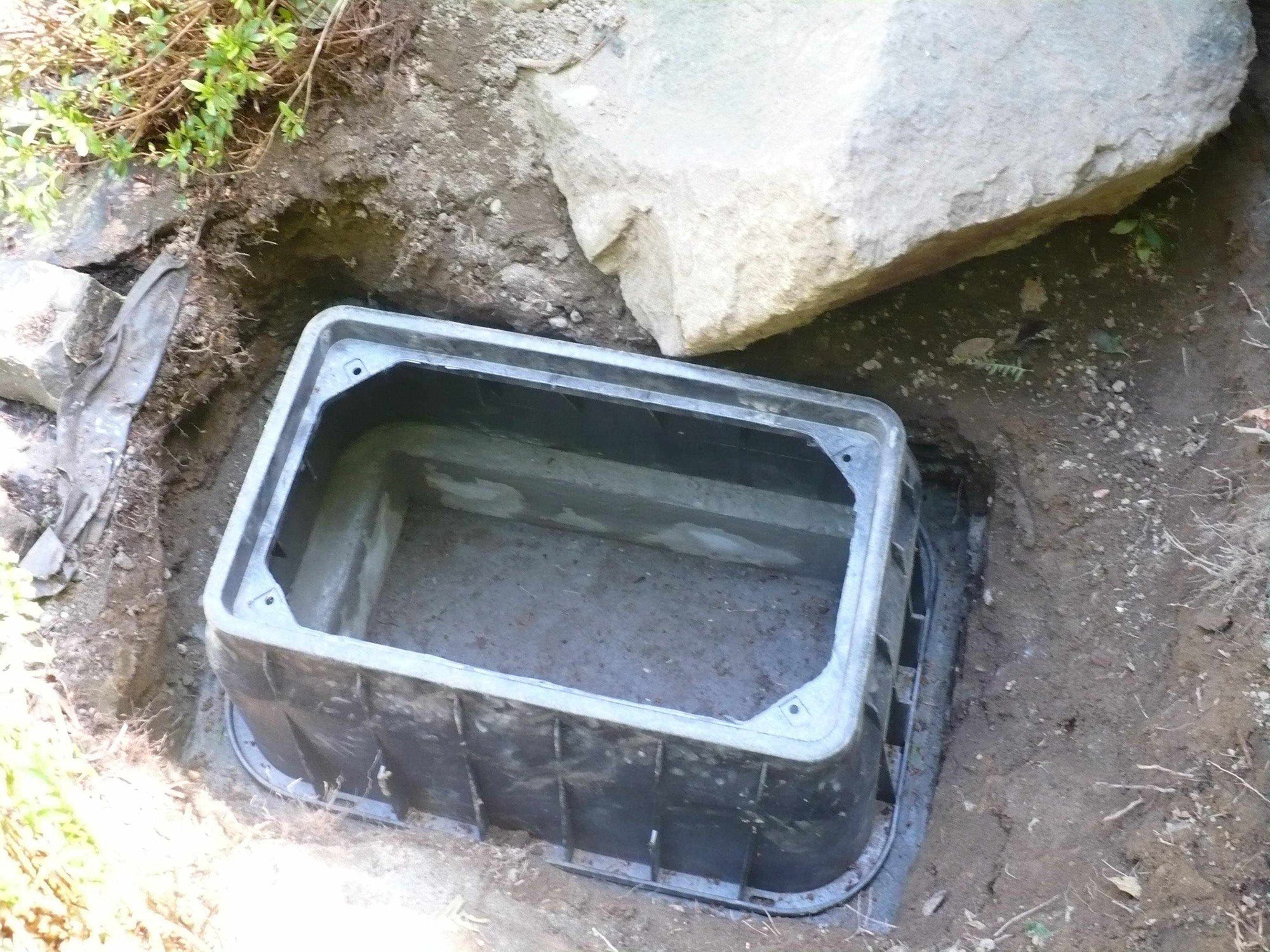
Housings: Either above or below ground housings will be needed to keep external pumps, aerator compressors, electrical hookups, skimmer or bio-filters, or even a place to store all your pond tools, accessories and gear. Housing might be camouflaged behind berms, bushes or even beneath fiberglass rocks; or these things can reside in above ground sheds, or structures that compliment the pond. In any case, some things you will use annually, others items all the time, so you want them to be convenient.
Tools, Gear and Accessories: Just like any hobby, there will be items that are specifically needed for ponders. Various tools to clean and fish debris out of the pond, test kits to monitor the water, fish nets, or other specialty items, such as replacement parts on hand in case something breaks or fails. You might want to consider waterproof pond gloves or hip waders too depending on the size of your pool. Further, you may need accessories such as predator decoys, safety or debris nets or lighting to enhance your pond.
Water Additives, Flora and Fauna: Adding chemicals, bacteria, or clarifiers to condition, clean or balance the water should always be on hand. These may be as simple as conditioners making fresh potable water safe for you pond algae, plants or fish. Clarifiers help clear the water if it is mucked up. Other treatments may include weed killers too. If adding aquatic plants or animals may increase the need for things like aquatic plant fertilizers, fish food or medicine. Additives are used up, so keep them in stock.
Previous Article: 04: Pond Planning – The Main Components
Next Article: 06: Pond Planning – Constructing the Main Pool