
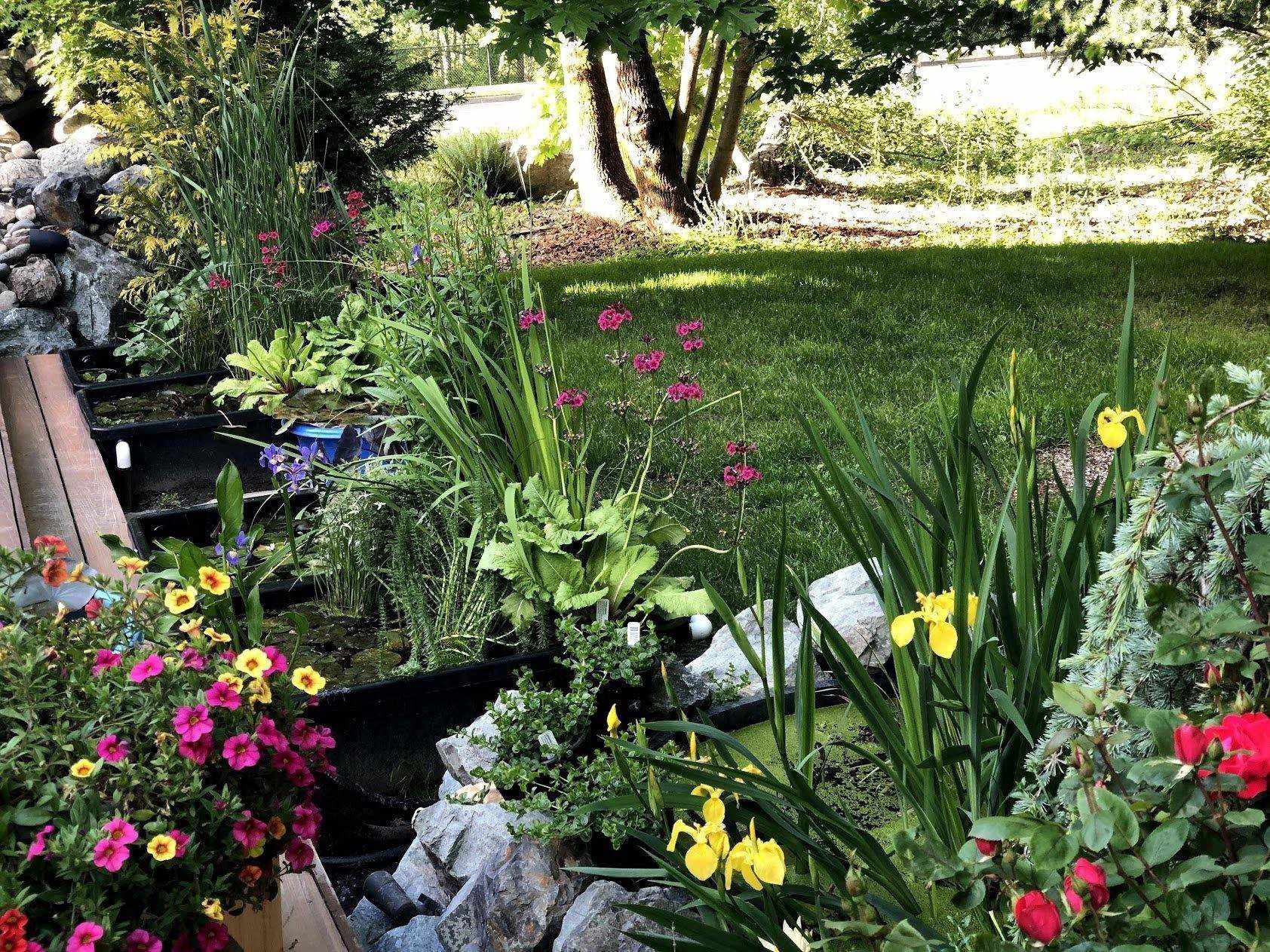
Welcome to Play It Koi's Bare Root Planting Guide
Our #1 goal is happy, repeat customers. We realize that purchasing pond plants online may seem intimidating at first. However, it’s actually quite simple and easy if you know-how and do a little prep work. No matter which pond plant you may be interested in, our goal is to equip you with the knowledge and right supplies necessary to successfully nurture and grow it into a mature and healthy pond plant.
*We advise quarantining new plants in a separate container for a minimum of two weeks prior to placing them into your pond.
This guide is broken into 7 sections:
- Hardy Water Lily Bare Root Planting Guide
- Tropical Water Lily Bare Root Planting Guide
- Lotus Bare Root Planting Guide
- Bog Plants & Marginal Plant Bare Root Planting Guide
- Submerged/Oxygenating Bare Root Planting Guide
- Floating Plant Bare Root Care Guide
- True Floating Bare Root Plants Care Guide
We hope you enjoy, and thank you for your support of Play It Koi!

Section 1 — HARDY WATER LILIES
Materials Required:
An appropriate sized lily pot container. Our most popular options include:
- Aquascape Aquatic Lily Pot 14” Round Fabric Container (2 pack)
- Aquascape Aquatic Plant Pot 12” Round Fabric Container (2 pack)
- No Hole Water Lily Planting Container: 12–15 inch diameter container
Loamy Water Lily Soil. Our most popular options include:
- Aquascape Pond Plant Media Soil
- Microbe-Lift Concentrated Aquatic Planting Media
- API Pondcare Aquatic Plant Media Soil
Water Lily Plant Fertilizer. Our most popular options include:
- PondTabbs Plant Fertilizer
- PondTabbs Plant Fertilizer Plus Humates
- Aquascape Once-a-Year Pond Plant Fertilizer Capsules
- NutraPond with Humic Acids

Hardy Water Lily Planting Instructions:
For best results, we recommend planting aquatic plants in Fabric Plant Pots. Use a heavy clay loam or a pre-packaged pond plant media specific for aquatic plants. If you try to use a soil that is light and fluffy, like a traditional potting soil, you will end up with a big mess on your hands. For your water lily to thrive and flower, you will also need to feed it once a month with aquatic plant fertilizer.
Once you've gathered your supplies and your bare root water lily plant has arrived from Play It Koi, it's time to plant. Keep your plant wet while you are planting it so that the leaves don't dry out. Hardy water lilies are planted using a loam garden soil and 2–3 fertilizer tablets. Hardy lilies grow horizontally across the container so a wide pot is necessary for planting (a 14 or 16-inch fabric pot is the best container). Fill your planting container to be about half-full with soil. Place 2 fertilizer tablets in the soil. You are now ready to plant.
Locate the rhizome (also commonly known as “the root” or the base of the plant from which the stems emerge). The rhizome should be planted at one edge of the container and at an angle of about 45 degrees with the crown exposed towards the center of the pot. Gently add soil over top being sure to keep the crown (the top of the root formation) exposed. Tamp down the soil to compact it a bit. Then, top with ½ to 1 inch of pea gravel. The pea gravel helps to make sure the soil won't float away. Do not cover the crown with pea gravel or stones, as this may hinder the plant's growth. Your plant is now ready to place in the pond.
Find a suitable location for your hardy water lily to rest. Most aquatics require at least 5 hours of direct sunlight for optimum growth. Water lilies like calm waters, so be sure to position them away from waterfalls, sprays, or fountains. The plant can be lowered to a depth of 6 inches to begin with, and then lowered to deeper depths as the plant grows.
Hardy lilies should be planted in early spring and should be fertilized every 4–6 weeks. Be sure that the fertilizer isn’t directly in contact with the lily’s roots, as it may burn them. They bloom from June through September depending on the weather and become dormant during the colder months. As spring approaches, growth will begin again.
Once your hardy lilies are potted, you’ll want to place them in your pond at depths appropriate for their size, and in still areas of the pond. Avoid placing them near waterfalls and fountains. Large to medium hardy lily varieties should be placed at depths between 18–30 inches. Small varieties prefer water depths between 12–24 inches. Finally, dwarf varieties should be placed at water depths between 6–12 inches.
Section 2 — TROPICAL WATER LILIES
Materials Required:
An appropriate sized lily pot container. Our most popular options include:
- Aquascape Aquatic Lily Pot 14” Round Fabric Container (2 pack)
- Aquascape Aquatic Plant Pot 12” Round Fabric Container (2 pack)
- No Hole Water Lily Planting Container: 12–15 inch diameter container
Loamy Water Lily Soil. Our most popular options include:
- McDonald’s Pond Soil
- Aquascape Pond Plant Media Soil
- API Pondcare Aquatic Plant Media Soil
- Microbe-Lift Concentrated Aquatic Planting Media
Water Lily Plant Fertilizer. Our most popular options include:
- PondTabbs Plant Fertilizer
- PondTabbs Plant Fertilizer Plus Humates
- Aquascape Once-a-Year Pond Plant Fertilizer Capsules
- NutraPond with Humic Acids
Tropical Water Lily Planting Instructions:
Tropical water lilies feature large flowers that are fragrant and borne on stems rising above the water’s surface. They need at least 6 hours of full sun each day and require warm, still water at temperatures of at least 70°F (or warmer). Typically, tropical lilies are treated as annuals, except in USDA Zone 10. In other regions, they can be overwintered in indoor greenhouses. Day-blooming tropical lilies bear flowers that bloom between mid-day and dusk. Night-blooming lilies have the opposite schedule, and their flowers open between dusk and mid-morning.
Tropical lilies require more care than hardy varieties and are grown from tubers. For best results, we recommend planting in large, wide containers and using heavy clay loam or mud. We recommend fertilizing your tropical lily monthly.
Once you've gathered your supplies and your bare root tropical water lily plant has arrived from Play It Koi, it's time to plant. Keep your plant wet while you are planting it so that the leaves don't dry out. Fill your water lily container approximately 2/3 full with soil, then place the lily in the center of the container. Pack soil approximately 2 inches above and around the roots of the plant, allowing another 2 inches between the crown and the top of the container. Once potted, place it in your pond with the crown between 6–24 inches below the water’s surface. Start in shallower water until it’s established.
Section 3 — LOTUS
Materials Required:
An appropriate sized pot container. Our most popular options include:
- Small Lotus (Bowl Lotus): under 15 inch diameter container
- Medium Lotus: 12–30 inch diameter container
- Large Lotus: 20–48 inch diameter container
Clay-based or amended soil. Our most popular options include:
- Aquascape Pond Plant Potting Media
- API Pondcare Aquatic Plant Media Soil
- Microbe-Lift Concentrated Aquatic Planting Media
Lotus plant fertilizer. Our most popular options include:
- Landon Aquatic Fertilizer (granular, mixed in at potting)
- PondTabbs Plant Fertilizer
- PondTabbs Plant Fertilizer Plus Humates
- NutraPond with Humic Acids
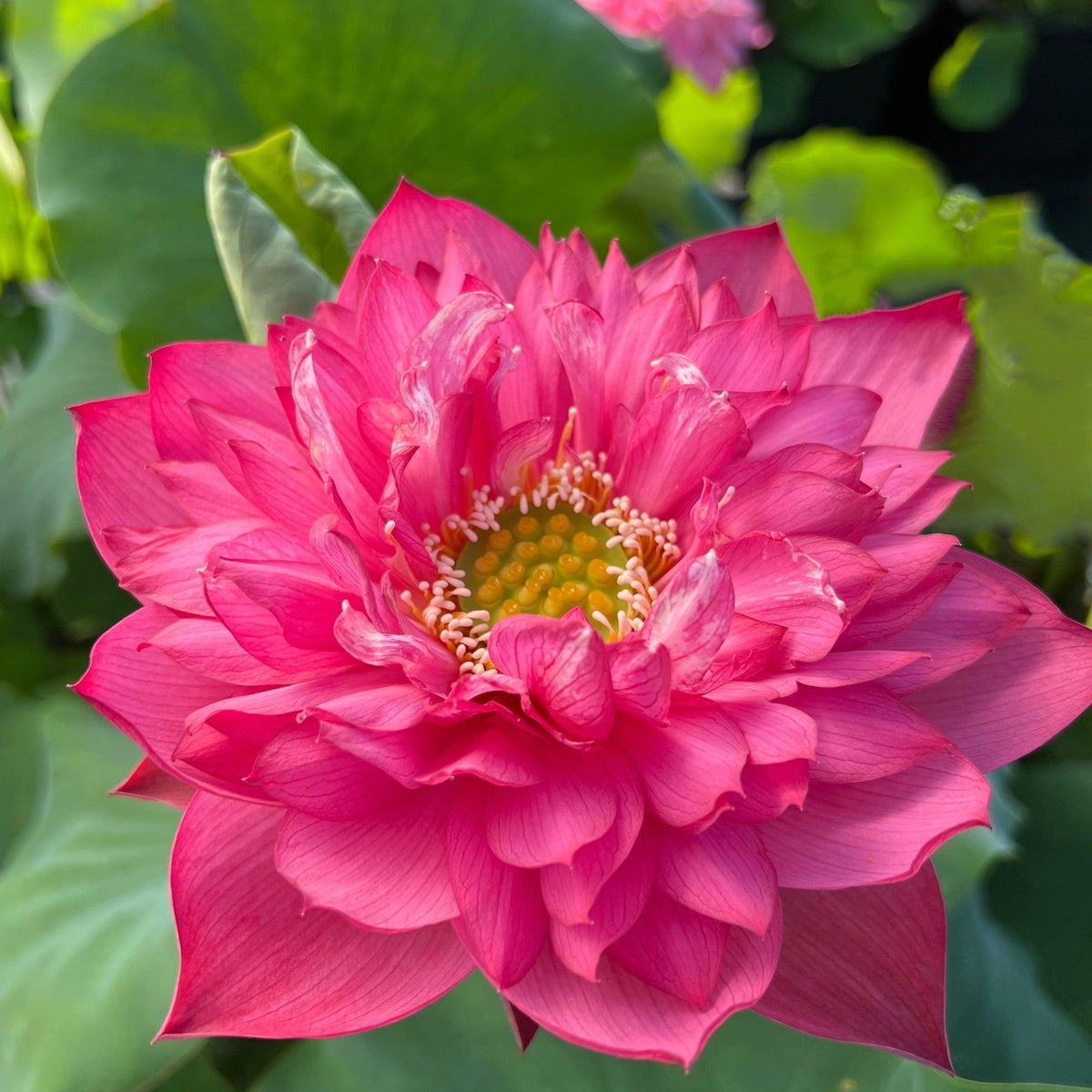
Water Lotus Planting Instructions:
Lotus flowers are a beautiful addition to any koi pond or water garden. While they are considered hardier than many, certain conditions are necessary to grow them well. Lotus flowers are usually planted in mid-spring through early summer. Lotus flowers need certain conditions to grow well, and may not even bloom until the second summer. During winter, you may leave your lotus in the pond as long as the tubers (roots) are protected from ice.
To grow a lotus from a tuber, find a sunny spot and a suitable sized pot. Large lotuses require a pot 24–48 inches in diameter, medium lotuses require pots 16–30 inches in diameter, and small lotuses require pots under 15 inches in diameter. If you choose a pot with holes and place it in a pond or water garden, lotuses may eventually grow outside the pot.
Fill the pot with amended soil, leaving approximately 4 inches at the top. Fill the pot with water until it rises about 2–3 inches above the soil. Plant the tuber with the growing tips pointed up. Important: do not bury the tuber completely or it may rot — keep the tips uncovered.
Water hardness (mineral accumulation) can affect lotuses grown in containers. To help prevent this, flush the soil water by overfilling the pot periodically. Lotuses require at least 3–4 weeks of temperatures above 80°F to start blooming. In colder climates, protect tubers from freezing during winter. Koi may disturb soil; if they interfere with lotus pots, place stones over the soil to reduce digging.
Feeding lotus
There are two ways to feed a lotus, and the timing is opposite for each. Mixing them up is the most common feeding mistake.
Granular fertilizer goes in at potting, before the tuber does. Landon Aquatic Fertilizer is mixed through the soil — half a cup per gallon of soil, fill the pot about two-thirds with that mixture, set the tuber on top, then cover with plain soil and leave the growing tip uncovered. One application feeds the plant for roughly 60 days, which covers the establishment window when a bare-root tuber is most vulnerable.
Tablets go in later, and only once the plant is growing. Wait until the lotus has several floating leaves or is beginning to put up aerial leaves before pushing in a tablet — a dormant tuber has no leaves to draw on it yet, which is where “do not fertilize too soon” comes from. PondTabbs and similar tablets are dosed by the amount of soil in the pot, usually one to two small tablets per gallon of soil. Once the plant is growing vigorously, repeat every 2 to 3 weeks.
Stop feeding in late summer. Letting the lotus use up the fertilizer left in the pot before it goes dormant encourages it to form better tubers for next season.
Pot size and water depth by lotus size class
Depth here means water above the soil surface inside the container. It is worth stating, because lotus depth gets published four different ways — over the soil, over the pot rim, over the pot's base, and total pond depth — which is why the same plant is described in one place as wanting three inches and in another as three feet. Every figure below is measured over the soil.
Whatever the size class, start a new tuber under 2 to 4 inches of water and raise the level as it pushes aerial leaves. The figures below are where it settles once established.
Bowl, micro and exquisite lotus
- Container: under 15 inches in diameter
- Water over the crown, established: 2 to 12 inches
- Watch for: too much depth is the usual failure. A bowl lotus set under two feet of water will not grow.
Medium lotus
- Container: 16 to 30 inches in diameter
- Water over the crown, established: 6 to 18 inches
Large lotus
- Container: 24 to 48 inches in diameter
- Water over the crown, established: 12 to 24 inches
- Watch for: spread. A large cultivar can cover several feet of surface, so size the space before you buy.
Pruning helps keep lotuses healthy. Remove yellow leaves. Only cut yellow leaves that are visible above the water — never cut leaves beneath the surface. After about 2 years of growth, move the plant to a larger pot to allow more growth.
Pests may be an obstacle. Insecticides and oil-based sprays/detergents can damage leaves. For aphids, diatomaceous earth powder can help, but it is not safe for aquatic life (including koi). Treat the plant outside of your pond and return it only after it is fully washed.
Need more?
Download Printable Lotus Planting & Care Instructions (PDF)
Section 4 — BOG PLANTS / MARGINAL WATER PLANTS / SHALLOW WATER PLANTS
Materials Required:
An appropriate sized pot container. Our most popular options include:
- Aquascape Aquatic 6” x 6” Round Fabric Container (2 pack)
- Aquascape Aquatic 8” x 6” Round Fabric Container (2 pack)
- Aquascape Heavy Duty Fabric Aquatic Plant Pots
- Laguna Fabric Plant Containers (3 sizes)
- Laguna 10” Floating Plant Basket
Loamy water soil. Our most popular options include:
- Aquascape Pond Plant Media Soil
- API Pondcare Aquatic Plant Media Soil
- Microbe-Lift Concentrated Aquatic Planting Media
Water plant fertilizer. Our most popular options include:
Bog plants and marginal water plants are adapted to having their roots submerged and do best along pond edges, where soil is moist but there is not a lot of standing water. For best results, we recommend planting aquatic plants in Fabric Plant Pots so water can drain. Use a heavy clay loam or a pre-packaged plant media specific for aquatic plants. Using light, fluffy potting soil can cause a good deal of headache. For bog plants to thrive, feed monthly with aquatic plant fertilizer.
Once you’ve gathered your supplies and your bare root bog plants have arrived, it is time to plant them. Keep your plant wet while planting so leaves don’t dry out. Use loam garden soil and fertilize with fertilizer tablets about once every 1–2 months. Select the right size pot or fabric planting bag with holes that allow oxygen to reach the roots. Fill the pot about 3/4 full with loam soil, make a hole large enough for the roots, hold the plant upright, and fill soil around the roots. Pack soil around the crown so it stays upright, but do not cover the crown.
Once your bog plant is potted, we advise selecting a shady area in your pond so it may properly adjust to its new environment. Depending on the size and variety, water levels over the top of the pot should be between 1/2 inch to 3 inches deep.
Section 5 — SUBMERGED / OXYGENATING PLANTS
Oxygenating plants such as hornwort, Giant Vallisneria, Mare’s Tail, Dwarf Sag, and bacopa aid in oxygenating and filtering your pond water (helping prevent algal growth). They provide shade and excellent habitat for fish and other pond inhabitants. As the name suggests, submerged plants thrive below the water’s surface, with all or most of the plant up to two feet underwater. Some submerged plants can also grow as emergent plants, where portions like leaves and flowers grow above the water’s surface. Submerged or oxygenating plants should be planted in shallow pots with loam soil, aquatic plant media, or pea gravel to submerge them.
Section 6 — FLOATING PLANTS
Floating plants, such as mosaic, water poppies, water snowflake, water hawthorne, appear to float on the water’s surface. Unlike true floating plants, these aquatic species should have their roots potted in smaller containers using loam soil. Select small containers, fill about 3/4 full with loam soil, place roots into a hole, and pack soil around the roots and crown so the plant stands upright. Place containers on pond shelves so leaves and flowers appear to float. Fertilize when necessary.
Section 7 — TRUE FLOATING PLANTS
True floating plants, such as water hyacinth, water lettuce, azolla, frogbit, duckweed, and mini water velvet, can be placed directly into the pond. No planting is required — they will simply float on top of the water column.
Water hyacinth is prohibited or restricted in a number of US states and cannot be shipped everywhere — check the product page for current restrictions before ordering, and never release it into a natural waterway. Water lettuce is prohibited or restricted in a number of US states and cannot be shipped everywhere — check the product page for current restrictions before ordering, and never release it into a natural waterway. Salvinia is prohibited or restricted in a number of US states and cannot be shipped everywhere — check the product page for current restrictions before ordering, and never release it into a natural waterway.
Oftentimes during transit, larger floating plants like water hyacinth and water lettuce will “drop” their roots, especially as it nears hotter summer months. This is a natural response and protection mechanism. While it may seem alarming at first, it’s nothing to worry about — they will regrow roots within a few weeks once in their new environment.
Some pond owners like to put floating plants into protective floating plant islands. While not required, this helps prevent plants from being swept into a skimmer and can protect roots from being eaten by hungry koi.